Tag: B2B Marketing

  • Conversational Marketing For BFSI – Increase Customer Engagement 

    Conversational Marketing For BFSI – Increase Customer Engagement 

    Conversational Marketing For BFSI – Increase Customer Engagement

    Conversational marketing has emerged as a game-changing approach for the Banking, Financial Services, and Insurance (BFSI) sector in the digital era. With the increasing demand for personalized customer interactions and seamless engagement, conversational marketing is transforming how BFSIs interact with their customers, generate leads, and drive business growth. In this blog, we will explore how conversational marketing is revolutionizing the BFSI industry and transforming customer engagement, drawing insights from reputable sources such as Brand Equity Economic Times and HubSpot Marketing Blog.

    We will begin by defining:

    • Conversational marketing and understanding its significance in the BFSI sector.

    • Advantages of conversational marketing, including enhanced customer experience, improved engagement and retention, increased lead generation, and efficient customer support.

    • We will discuss strategies for implementing conversational marketing in BFSIs, including tools, technologies, and employee training.

    • We will also highlight success stories of BFSIs leveraging conversational marketing and extract key lessons from them.

    As BFSIs seek innovative ways to stay ahead in a highly competitive market, conversational marketing is becoming a pivotal strategy to drive customer satisfaction, loyalty, and business growth. Let’s dive deeper into how conversational marketing is reshaping the landscape of BFSIs and propelling them towards success.

     Understanding Conversational Marketing

    Conversational marketing is a customer-centric approach that focuses on engaging and interacting with customers in real-time conversations, leveraging various digital channels such as chatbots, messaging apps, social media, and other communication tools. It is based on the premise of personalized, two-way communication, where customers can interact with a brand just like they would with a human, through natural language conversations.

    In the BFSI sector, conversational marketing has gained significant traction due to the increasing need for seamless customer interactions and personalized experiences. Today’s customers expect quick responses, convenient access to information, and personalized solutions to their financial needs.

    Conversational marketing enables BFSIs to meet these expectations by providing real-time assistance, proactive engagement, and personalized recommendations.

    Conversational marketing in BFSIs goes beyond traditional marketing approaches and focuses on building meaningful relationships with customers through ongoing conversations. It allows BFSIs to understand customer needs, preferences, and pain points in real-time, thereby facilitating better targeting and customization of products and services. Conversational marketing also enables BFSIs to capture valuable customer data, such as transaction history, financial goals, and preferences, which can be analyzed for insights to drive informed business decisions.

    Moreover, conversational marketing in BFSIs enables seamless customer support, where customers can seek assistance, resolve queries, and receive personalized guidance round the clock, without the need for human intervention. This not only enhances customer satisfaction but also reduces the burden on customer support teams, enabling BFSIs to provide efficient and cost-effective customer service.

    Advantages of Conversational Marketing for BFSIs

    Conversational marketing has numerous advantages for BFSIs, providing them with a competitive edge in the digital landscape. Here are some key benefits:

    1. Enhanced Customer Experience: Conversational marketing allows BFSIs to deliver personalized and interactive experiences to their customers, leading to enhanced customer satisfaction. Customers can engage in real-time conversations, seek assistance, and receive customized recommendations, which creates a sense of personalization and builds trust. This leads to improved customer loyalty, retention, and advocacy, ultimately driving business growth.

    2. Improved Engagement and Retention: Conversational marketing enables BFSIs to proactively engage with customers, keeping them informed about relevant products, offers, and updates. This leads to increased customer engagement, as customers can easily respond and interact with the brand through conversational channels. Moreover, conversational marketing facilitates ongoing conversations with customers, nurturing the relationship and increasing customer retention.

    3. Increased Lead Generation: Conversational marketing allows BFSIs to capture leads and prospects through interactive conversations. Chatbots and messaging apps can collect customer data, qualify leads, and route them to appropriate sales channels. This streamlines the lead generation process, accelerates sales cycles, and improves conversion rates. Conversational marketing also enables personalized lead nurturing, as chatbots can engage with prospects, provide information, and guide them through the sales funnel.

    4. Efficient Customer Support: Conversational marketing in BFSIs provides round-the-clock customer support, allowing customers to seek assistance at their convenience. Chatbots can handle routine queries, provide product information, and resolve issues, freeing up human support teams to focus on complex queries. This results in faster response times, reduced customer wait times, and increased customer satisfaction.

    5. Data Collection and Analysis: Conversational marketing allows BFSIs to capture valuable customer data, including transaction history, preferences, and feedback. This data can be analyzed to gain insights into customer behavior, preferences, and trends, which can drive data-driven decision-making. It also enables BFSIs to segment customers, personalize offerings, and optimize marketing strategies for better results.

    6. Cost-effective and Scalable: Conversational marketing in BFSIs is cost-effective and scalable, as chatbots and messaging apps can handle multiple conversations simultaneously, reducing the need for human resources. Chatbots can also handle routine tasks, such as account balance inquiries, bill payments, and appointment scheduling, freeing up human employees to focus on higher-value activities. This makes conversational marketing a cost-effective solution for BFSIs, enabling them to scale their operations efficiently.

    Implementing Conversational Marketing in BFSIs

    Implementing conversational marketing in BFSIs requires careful planning and execution to ensure its effectiveness. Here are some key steps to consider:

    1. Define Objectives: BFSIs need to clearly define their objectives and goals for implementing conversational marketing. This includes identifying the target audience, understanding their needs, and determining the desired outcomes, such as improving customer experience, increasing lead generation, or enhancing customer support.

    2. Choose the Right Channels: BFSIs need to identify the appropriate digital channels for implementing conversational marketing. This may include chatbots on websites or messaging apps, social media platforms, or other communication tools. It’s essential to choose channels that align with the target audience’s preferences and ensure seamless integration with existing marketing and customer support channels.

    3. Develop Conversational Content: BFSIs need to create conversational content that resonates with their target audience. This includes developing relevant and engaging messages, responses, and prompts that align with the brand’s tone of voice and provide value to customers. The content should regularly be updated to reflect changing customer needs and preferences.

    4. Implement Chatbots and Automation: BFSIs need to implement chatbots and automation tools to facilitate conversational marketing. This includes developing chatbots that can handle routine tasks, provide information, and engage in meaningful conversations with customers. Automation tools can also help streamline data collection, lead routing, and customer segmentation processes.

    5. Ensure Personalization: Personalization is key to successful conversational marketing in BFSIs. BFSIs need to ensure that their chatbots and messaging apps can personalize interactions based on customer data, such as transaction history, preferences, and browsing behavior. This includes using customer data to provide personalized product recommendations, offers, and solutions to customers’ financial needs.

    6. Train and Monitor Chatbots: BFSIs need to train and monitor chatbots to ensure their accuracy and effectiveness. Chatbots should regularly be updated with new information and responses, and their performance should be monitored to identify and resolve any issues. Regular audits and customer feedback should be used to improve chatbot performance continuously.

    7. Comply with Regulatory Requirements: BFSIs need to ensure that their conversational marketing efforts comply with relevant regulatory requirements, such as data privacy and security regulations. This includes obtaining necessary permissions from customers, protecting sensitive information, and adhering to industry-specific regulations related to financial services.

    8. Analyze and Optimize: BFSIs need to continuously analyze and optimize their conversational marketing efforts. This includes analyzing data collected from customer interactions, monitoring performance metrics, and identifying areas for improvement. Data-driven insights should be used to optimize conversational content, chatbot performance, and overall conversational marketing strategies.

    Success Stories of Conversational Marketing in BFSIs

    Conversational marketing has proven to be a game-changer for many BFSIs around the world. Here are some success stories that highlight the impact of conversational marketing in the BFSI industry:

    1. Bank of America’s Erica: Bank of America’s virtual assistant, Erica, is a prime example of how conversational marketing has transformed the customer experience in the banking industry. Erica is an AI-powered chatbot that helps Bank of America customers manage their accounts, make transactions, and get personalized financial guidance through the bank’s mobile app. Erica has significantly improved customer engagement, reduced customer service calls, and increased customer satisfaction, resulting in a more seamless and convenient banking experience.

    2. Mastercard’s KAI: Mastercard’s KAI is a conversational AI platform that has been successfully implemented by many BFSIs to enhance customer engagement and drive business growth. KAI powers virtual assistants, chatbots, and messaging apps for financial institutions, providing personalized recommendations, transaction insights, and financial management tips. KAI has helped BFSIs improve customer interactions, increase lead generation, and enhance customer loyalty by providing personalized and convenient financial services.

    3. DBS Bank’s NAV: DBS Bank’s NAV is a conversational banking platform that has transformed the way customers interact with the bank. NAV provides customers with personalized financial planning and investment advice through natural language conversations. Customers can ask questions, get recommendations, and receive real-time updates on their investments. NAV has helped DBS Bank deepen customer relationships, increase customer engagement, and boost investment sales.

    4. Ally Bank’s Ally Assist: Ally Bank’s Ally Assist is an AI-powered virtual assistant that provides personalized customer support and financial guidance. Ally Assist is available through the bank’s website and mobile app, offering assistance with tasks such as managing accounts, making transfers, and answering frequently asked questions. Ally Assist has improved customer satisfaction, reduced call volumes, and increased customer loyalty by providing quick and convenient support.

    5. HSBC’s Amy: HSBC’s Amy is a conversational AI-powered virtual assistant that provides personalized customer support and financial guidance. Amy is available through HSBC’s website and messaging apps, helping customers with tasks such as checking account balances, making payments, and providing information on financial products. Amy has improved customer engagement, reduced customer service calls, and provided a seamless and convenient banking experience.

    These success stories demonstrate how conversational marketing has revolutionized the way BFSIs engage with their customers, provide support, and drive business outcomes. By leveraging the power of conversational marketing, BFSIs can enhance customer experience, improve customer engagement, increase lead generation, and boost business growth in today’s digital landscape.

    Conclusion

    Conversational marketing has emerged as a powerful strategy for BFSIs to up their game in the digital era. By leveraging chatbots, messaging apps, and other conversational channels, BFSIs can provide personalized and convenient experiences to their customers, streamline communication, enhance customer engagement, and drive business growth. However, successful implementation of conversational marketing requires careful planning, content development, automation, personalization, training, compliance, and optimization. BFSIs need to understand their customers, define objectives, choose the right channels, develop conversational content, implement chatbots and automation, ensure personalization, comply with regulatory requirements, and continuously analyze and optimize their conversational marketing efforts for maximum impact.

    As the BFSI industry continues to evolve, conversational marketing is expected to play a pivotal role in shaping the future of customer engagement and driving business success. BFSIs that embrace conversational marketing as a strategic imperative are likely to stay ahead of the competition and deliver superior customer experiences in today’s digital-first world.

     Next Step

    By partnering with Technocratiq Digital, BFSI industry can leverage their expertise and resources to implement effective conversational marketing methods that enhance customer experience, drive engagement, and boost business growth. A BFSI marketing agency can provide strategic guidance, content development, automation, personalization, compliance, and optimization services that are tailored to the unique needs and goals of BFSI companies. So, take the next step and collaborate with Technocratiq Digital, India’s #1 BFSI marketing agency, to harness the power of conversational marketing for your BFSI business success. Contact us now to learn more!

  • Using chatbots to improve customer service

    Using chatbots to improve customer service

    As the use of technology in our everyday lives continues to surge, automating customer service is becoming increasingly popular. Chatbots are a type of artificial intelligence (AI) software that can be used to facilitate communication between businesses and customers. This technology has been around for some time but is now rapidly increasing in popularity due to its ability to alleviate the workload of customer service representatives, improve customer satisfaction, and reduce costs for businesses.

    Customer service is often one of the most important parts of any business, as it is responsible for providing timely feedback to customers and resolving their issues. However, providing quality customer service can be expensive and time-consuming for businesses, particularly when dealing with a large customer base. To overcome this, more and more companies are turning to chatbots as a cost-effective solution.

    By utilizing natural language processing and artificial intelligence, businesses can create automated virtual agents that are capable of providing customers with assistance in a more rapid and efficient manner than human customer service representatives. This allows businesses to respond to customer inquiries more quickly, free up staff to focus on more complicated customer issues, and provide a more consistent customer service experience across all channels. Chatbots can be programmed with a variety of capabilities, including responding to frequently asked questions, providing product recommendations, helping customers navigate the website, and more. Additionally, they can be customized to a business’s specific needs, allowing for a more tailored customer service experience.

    Natural language processing or NLP allows Chatbots to automate customer service tasks such as answering basic questions, taking orders, providing information on products and services, troubleshooting issues, as well as scheduling appointments, and tracking orders. Thanks to their AI capabilities, chatbots can understand customer inquiries efficiently and provide accurate responses in a timely manner.

    Using chatbots for customer service has several advantages

    1.  For one, they can be programmed to provide 24/7 customer support and respond instantly to inquiries. This allows businesses to serve customers round the clock without having to hire additional staff or pay overtime wages.

    2.  Additionally, chatbots can handle multiple chats at once, which increases the efficiency and responsiveness of customer service departments.

    3. They also enable businesses to easily collect valuable data about customer behavior and preferences which can be used for marketing purposes.

    4. Moreover, using chatbots eliminates language barriers by allowing customers from different backgrounds and countries access support in their native languages.

    5. Chatbots also improve customer satisfaction by ensuring customers feel heard during interactions with a business’s support team.

    6. Chatbots are easily customizable and can be programmed with your brand’s voice and personality so that customers have a consistent experience when interacting with them.

    7. Finally, chatbots can help businesses save costs since they require minimal setup costs compared to hiring additional employees or outsourcing customer service tasks.

    8. Chatbot software tends to be much cheaper than other automation solutions as well; plus they don’t require payment for overtime or holiday wages like human agents do.

    9. Chatbots can be used to automate repetitive customer service tasks, such as order processing, order tracking, and even customer feedback surveys.

    Overall, the use of chatbots can bring many benefits to businesses looking to improve their customer service strategies. These automated assistants can help businesses save time and money while providing customers with an improved experience by offering 24/7 support in multiple languages. As such, chatbots are a great way for businesses to optimize their customer service operations and stay ahead of the competition.

    They are useful for quick, automated responses and help companies save time and money by eliminating the need for in-person customer service reps. Chatbots also offer customers a personalized experience that can lead to increased customer satisfaction and loyalty. When used correctly, chatbots can greatly enhance customer service in any organization.

    About Technocratiq Digital

    • We are your Brand agents and partners with an unbiased opinion and hawk-eye view to take you to the top.
    • We’re experts in engaging audiences & converting clicks to customers.
    • Our team consists of highly skilled professionals, who have expertise in different niches, provide the best solution and convert your dream into a beautiful reality.
    • We understand the value of web presence for any industry and work hard to manage the overall online ecosystem.

    Contact us today and get started with your Marketing Technology Automation.

  • What is Search Intent in SEO?

    What is Search Intent in SEO?

    Google used to rely primarily on plain text and backlinks to determine ranks in its early days. Google search has evolved into a robust product with a variety of algorithm changes aimed at promoting content and results that are relevant to a user’s needs.  That is the reason understanding search intent in SEO has become super important for SEO professionals.

    SEO is a measurable entity.  It is measured on ranking, traffic gained by a website, search volume for a particular keyword, and sales or conversions that take place on the website.  A business owner will want to rank higher on Google and see an increase in their organic traffic that will generate sales and provide them with leads.  These can be achieved by keeping track of the metrics mentioned above.

    However, the most important thing that comes before all these measurable entities is the selection of the right keywords. To choose the right keywords, SEO professionals generally tend to look at search volume and ignore to understand the search intent of a keyword. The content should satisfy the user intent as well as be relevant to the search query for it to rank.

    Search users can be divided into two categories:

    • Specific – Specific users are those who are precise about their search and do not deviate.
    • Exhaustive – Exhaustive search users are those who research a lot and get into the depth of the topic.

    Search engines are continuously trying to improve their understanding of search intent.

    Search engines like Google divide the relevancy of keywords into three categories:

    • Fully relevant – Those keywords that match exactly with the search query.
    • Partially relevant – Those keywords whose search intention is not clear but match with part of the search query.
    • Keywords with multiple meanings – These are the queries that do not tell search engines what the user is actually looking for.  For example, queries like “apple”, it can be related to a fruit or mobile device.

    To answer such keywords with more than one meaning, search engines follow the query interpretation method.

    What is query interpretation?

    When a user enters a keyword that does not convey the correct intent of the search or confuses the search engine, search engines try to interpret the meaning of the keyword to provide the best possible results to the search query.  Query interpretation is of 3 types.

    • Dominant type of interpretation – This is the interpretation which the majority of the users mean when they put in a query, something similar to exact match type.
    • Common type of interpretation – This interpretation is when the search engine is not clear about the query.  Search engines try to provide results based on common interpretations that they can make and provide varying results, similar to our previous example of “Apple.”
    • Minor type interpretation – Queries that have less frequent meanings, which are generally location-specific can be termed as minor interpretations.

    Now that we know about search user categories, keyword relevancy categories, and query interpretations; it is time to understand the search intent.  Search intent is divided into transactional, informational, and navigation queries.

    Transactional Queries

    When a user types in a “do” query, they want to take a specific action, such as buying a product or reserving a service. These are crucial for e-commerce websites, as a consumer may be searching for a specific brand or item.  The purchases or bookings are made online, hence the transactional element is present in such queries.  These are called transactional queries.

    Informational Queries

    These queries are in which the user wants to learn more about a specific topic. Words such as “know” or “know more about” are used in such queries.  Nowadays, these queries relate a lot to micro-moments.  This is because of the use of smartphones with internet connections.  Whenever a user wants some instant information immediately and a search is done with this intent, it is called micro-moment queries.  For example, checking gold or stock rates.  Informational queries can range from simple to complex questions. Product research which is done before the transactional query also falls under the category of the informational query.  Informational queries are given special attention by google because they provide value to customers, whereas transactional queries help businesses.  So to grow your business, it is important to give customers information about your products or services using these informational intent keywords.

    Navigational Queries

    Navigational queries are brand-oriented where a user wants to visit a specific website to know more about the brand or business.

    Other factors which SEO professionals need to keep in mind along with these search intentions are:

    • Featured snippets can help boost SEO.  Appearing in featured snippet does not mean your website will drive a lot of traffic, but it increases the click through rate and introduces you to new users.
    • Understand the buyer journey. It is important to know how a person searches and where they are on their buyer journey.
    • Search intent is not constant, it keeps changing.  As search intent changes, search results also change.  Based on user searches, transactional queries can change into informational and vice versa.  This depends on the situation and the surrounding environment.
    • Machine learning is improving over time, and when combined with other algorithm changes, it has the potential to alter search results pages.

    In conclusion, understanding searcher intent is one of the most important aspects of SEO. By understanding what users are looking for, you can better optimize your content and website to meet their needs. Additionally, incorporating user intent into your SEO strategy can help you to improve your rankings and drive more traffic to your website.

  • 6 Key Metrics to measure Internal Brand Health

    6 Key Metrics to measure Internal Brand Health

    What is Internal Branding

    Internal Branding is a corporate strategy measure to empower and motivate employees to not only retain the brand promise but to “live” it. To do this, organizations involve employees in the process of brand development, inform them about the brand, and encourage them to feel inspired about the brand in order to influence their behavior to support the brand. Internal branding is essential because brands grow from the inside out and in fact contribute to increased sales.

    To measure internal branding we can use a framework of 6 A’s of internal brand health.

    1 . Attention

    2 . Awareness

    3 . Acceptance

    4 . Advocacy

    5. Action (most critical)

    6 . Adherence

    Each factor adds up to a measurement system where you can get a heat map of the internal brand health of the organization. So you can assess your organization and can look at the pockets where the brand is delivering and where it’s not delivering. Finally, you can engage in requisite action as a result.   Let’s discuss it in detail:

    Attention

    The first aspect of measuring the internal brand health is to understand if everyone is giving attention to the definition and do all the employees understand the importance of their brand promise? For example, operations have different KPIs in their job and they are not paying attention to the image or promise that the senior level wants to portray. They probably don’t even realize what they’re doing in terms of your brand. So it attention should be given to it.

    Awareness

    Most employees do not understand their company’s strategy and in turn, they don’t understand the company’s brand promise. It is important if you can boil down the brand promise not to six, seven, eight different aspects, but maybe one or two and make everyone aware about it.

    If you do a preliminary internal review, you’ll see that across your organization, people have quite a different sense of what your brand is about.

    Acceptance

    This is really when it gets to the personal level.

    Do I personally believe in this brand’s promise?

    I might understand it, but it doesn’t mean I believe in it, I identify with it, I accept it as being the right thing. I might have other ideas for the brand.

    Segment your population into Antagonists (the ones who don’t care) and brand ambassadors or advocates who will make sure your brand message is spread.

    Advocacy

    Advocacy is all about the personal motivation you derived from the brand.

    Do your employees believe that they are positively affecting someone or some cause? A lot of people do get motivated by making a difference in other people’s’ lives.

    They sense and feel your strategy as part of their work, and that’s where the advocacy comes from.

    Action

    It is one of the most important as a lot of companies fail to implement it even after defining and designing an excellent brand structure.

    Do your employees actually know what to do in order to deliver on the brand promise?

    So imagine the fact that you have employees, they know your brand, they think branding is important, they are motivated by it, but they don’t know what to do. It’s sometimes not obvious how to deliver on the brand promise. So creating an action plan and measuring its strength is essential to measure the brand health. Reach out to us at info@technocratiq.com for a strong action plan.

    Adherence

    Now, the final one is really about adherence, do things stick? Does the environment, the culture of the organization, the rewards, recognition, the systems, the processes, do they actually help live their brand?

    So, imagine the following that if your brand is all about customer care, but then all you get rewarded is for sales. So, it’s all about how these things fit together.

    Yes, you are told to provide customer care but you know what? In a call center, you are rewarded based on the number of calls per hour. So there’s a disconnect between what we want to achieve with the brand, and what we reward people for and build the culture of the organization.

    That’s really the internal aspect of brand health.

    Conclusion

    Internal Brand Health is an early indicator therefore, you need to change things internally before you can see the results externally. It’s a significant aspect of brand health, one we do not see implemented in many organizations.

    TIQ forms a perfect alternative to solve all your queries and provide you a proper Brand Strategy. For questions or to get your company’s internal brand health monitored, drop us an email at info@technocratiq.com or call at +91 798 25 34 881.

  • How can brand perception monitoring affect a change in your business decisions

    How can brand perception monitoring affect a change in your business decisions

    How can brand perception monitoring affect a drastic change in your company’s business outlook?

    MODERN WAY: Measuring brand health is turning the traditional sales funnel upside down, which is from a brand perspective, not looking at the sales, but saying:

     How many customers are aware of our band?
      What do customers want from brands?

     How many consider us?

     How many prefer us?

    Is your customer loyalty based on Price or Preference? Customers might prefer your company, but still, buy something else because of the price.

    How many have an emotional bond with your company? Will they really struggle to buy something else?

    To answer all the above questions, Brand perception needs to be considered from an entirely inverted funnel that puts the Customers at the top and Management driving the Brand at the bottom.

    Monitoring the inverted funnel directly results in translating changes into actual customer behavior in terms of consideration, in terms of purchase, and loyalty.

    One critical aspect of brand perception is to look beyond the sales number and focus on becoming the preferred choice.

    Now for some brands, this can be a real problem because by appealing to some groups of customers, they are actually not appealing to other ones.

    Red Bull has created a perception towards young, excitement seeking individuals, predominantly related to adrenaline or sports. It does not target the perception of others e.g. it will surely not a drink that parents will buy in grocery shopping for their kids like Pepsi and Coca-Cola. Similarly, Disney, the concept of magic also follows the same perception.

    Critically think about the customers with whom you want to own these associations, which ones do you want to sell to, which ones do you not want to sell to. And then think about that pyramid or inverted sales funnel because that’s what’s driving your business at the end of the day.

    Critical aspect

    Who actually delivers on that promise, it’s your people. Either directly through their behavior, or indirectly through the products and services.

    So now you need to ask yourself the questions well what if my people don’t know what my brand stands for. What if they don’t believe in it, what if it doesn’t motivate them. Well, then you’re going to fall short in the delivery of your business strategy.

     Opt our Brand Strategy Services which helps you monitor your Brand understanding and delivery.

    Conclusion

    Hence monitoring and correcting Brand perception can help you achieve your business goals in the long run and provide loyal customers and strong brand advocates as internal branding is equally important.

    TIQ provides you a perfect strategy to solve all your queries. For questions or to share your project details with us, drop us an email at info@technocratiq.com

  • HOW COMPANIES ARE OPTING FOR DIGITAL TRANSFORMATION

    HOW COMPANIES ARE OPTING FOR DIGITAL TRANSFORMATION

    Business Transformation through Digital Marketing in the Asian subcontinent has seen a massive spike in recent years. The markets are changing rapidly every year while creating new means to track consumers’ attention, needs, and preferences. Platforms like TikTok and Snapchat are instant hits while Instagram and Facebook have strengthened their position.


    What is a digital business transformation?


    Digital business transformation is the blueprint of your business activities which creates and integrates a digital ecosystem for all aspects of your business. Whether it is sales, accounts, or product enhancement, it covers it all. Creating a self-sustainable digital platform requires an expert’s assistance. Connect with us today for a free consultation.


    Still, contemplating on building your company’s digital presence? Here are some advantages!

    1. Increase Productivity

    2. Reduce operating costs

    3. Improve customer experience

    4. Facilitate internal process integration

    5. Open new market opportunities

    6. Strengthen and enhance the brand value


    Digitization enables businesses to enhance their efficiency, boost their competitiveness, and enter new markets. The digital revolution transforms the world in many ways like the way we connect, communicate, and consume content. Companies regardless of size or sector must use this golden time to attract more consumers hence increasing the bottom line.


    Digital marketing has become an ancillary activity for every organization and digitizing an enterprise is no longer an objective, but a way to strengthen corporate management and maximize efficiency. Digitization is a must if you are to have a successful business post downturn. Consumers have changed their preferences, needs, desires, and consumption methods.


    3 Fundamental Pillars of Transformation –


    People, automated data processing, smart digital communications are the three pillars on which every business can successfully transform digitally. All aspects of the business should be impacted by real digital transformation.


    Digitalization is not ephemeral and is here to stay! Check out our unique solutions which handholds you to your next new client


    Follow us on our Social Media Channels

    FacebookTwitterYoututbeLinkedInInstagram

  • B2B Marketing News: Digital Marketing Priorities, Ultimate CX, B2B Burnout, The Power of Podcasting

    B2B Marketing News: Digital Marketing Priorities, Ultimate CX, B2B Burnout, The Power of Podcasting

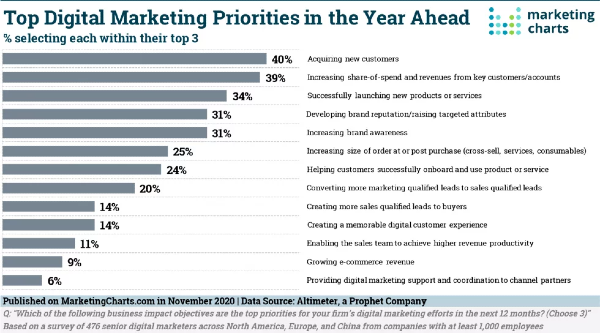
    Where Do Digital Marketers’ Priorities Lie for the Year Ahead?

    Digital marketers have a clear vision of their priorities though some are working with less marketing resources than others, according to Altimeter’s State of Digital Marketing report for 2020. The report highlights that organizations are either cutting costs as a response to the financial uncertainties of the crisis or upping investments in digital to keep up with customers moving online. MarketingCharts


    The CX Courtship: How B2B Brands Get To The Partnership Stage [Merkle Study]
    The B2B customer experience should be just as smooth as B2C. But too often it’s not. Indeed, 35% of businesses with 1,000 or more employees find choosing a B2B supplier to be almost a nightmarish process, judging by Architecting The Ultimate Customer Experience, a study by Merkle, with participation from its gyro and B2B International agencies. MediaPost


    B2B Pros Say: ‘We’re Burned Out’ By Pandemic: Study
    B2B marketers are falling apart from the stress of COVID-19 and its ongoing impact, according to Revealing What’s Fact And What’s Fiction, a study by RollWorks. Of the marketers surveyed, 50% have suffered from pandemic-related burnout, And 50% say the lines between work and personal life have become more blurred in a negative way.  Email Marketing Daily


    Google Page Experience Update To Launch May 2021 With New Snippet Labels.
    The update will show new basic page performance and expected experience statistics to searchers, Google says. Search Engine Roundtable


    How Social Issues Are Sparking Action Among Brands
    A majority of consumers now expect brands to take a stand on social issues and work to effect positive change—though their sentiments are sometimes complicated. A June 2020 survey by Mindshare found that more than two-thirds of US adults said brands should play an important role when it comes to speaking out against racial inequality and injustice. However, six in 10 believed brands that spoke out were being opportunistic. eMarketer


    B2B influencer marketing budgets 2021Marketers Raise Podcast Volume to Eleven – The format is poised to become a permanent and powerful marketing channel
    With podcast advertising racking up 48 percent year-over-year growth in 2019, according to an IAB study, the medium’s 14.7 percent projected growth in 2020 might seem anemic. But that slowed growth is merely a pandemic-induced blip on the radar. The longer-term outlook remains stellar, with spending projected to rebound almost 45 percent, to more than $1 billion in 2021, according to eMarketer, and marketers and media companies are making big bets on the format’s staying power. ANA

    We’re in this together: 5 takeaways from Adobe Experience Makers EMEA 
    This is a unifying moment for businesses. Across virtually every industry and discipline, business leaders are rethinking their approach to leadership, employees are finding new ways to perform their jobs in a digital world, and consumers are re-evaluating the way they make purchases. Adobe


    Instagram Adds Keyword Search in Addition to Profiles and Tags 
    Instagram has announced an update to its search functionality which will give users the capacity to search for specific keywords, as opposed to being limited to profiles, hashtags and locations. Social Media Today


    Executing A B2B Integrated Marketing Strategy: Who and What’s Involved?
    7 in 10 organizations have implemented integrated marketing to some extent, though it remains challenging for many, according to Demand Gen Report and True Influence’s report on the state of integrated marketing in B2B. When it comes to the best tools for executing an integrated marketing strategy, respondents cited CRM (80%), data tools (65%), reporting platforms (63%) and collaboration tools (44%) as particularly useful. MarketingCharts


    New Survey Says We’re Spending 7 Hours Per Day Consuming Online Media 
    A new survey conducted by the research firm DoubleVerify found that we’re now spending about seven hours per day consuming online content. In the past we typically spent about three hours per day consuming media. YouTube streaming has sky-rocketed, up 43% since the pandemic started. We’re also even more obsessed with Facebook with a usage increase of 40%. Forbes


    ON THE LIGHTER SIDE:

    How to do strategic planning by Tom Fishburne — Marketoonist


    TOPRANK MARKETING IN THE NEWS:


    TopRank Marketing – 2020 Research: The Current State & Future of B2B Influencer Marketing – Onalytica

    TopRank Marketing Blog – Top 20 Digital Marketing Blogs and Their Specialties – Vocal


    Have you found your own favorite B2B marketing story from the past week of industry news? Please let us know in the comments below.


    Thank you for joining us for our weekly B2B marketing news, and we hope that you will return again next Friday for another round-up of the most relevant B2B and digital marketing industry news. In the meantime, you can follow us at @toprank on Twitter for even more timely daily news.


    The post B2B Marketing News: Digital Marketing Priorities, Ultimate CX, B2B Burnout, The Power of Podcasting appeared first on B2B Marketing Blog – TopRank®.

  • B2B Marketing News: B2B Buying Disconnect Study, Google’s SERP Video Carousels, B2B Event ROI Data, & Instagram’s New Story Reactions

    B2B Marketing News: B2B Buying Disconnect Study, Google’s SERP Video Carousels, B2B Event ROI Data, & Instagram’s New Story Reactions

    How Can You Improve Your B2B Virtual Event’s ROI?
    47.6 percent of B2B professionals see post-virtual-event audience engagement as having the top return-on-investment (ROI) potential, followed by some 36 percent who said that making the virtual format more dynamic and interactive was a priority, according to recently-released survey data. MarketingCharts


    Adweek Survey Finds 40% of Brands Might Seek New Agencies in 2021
    75 percent of marketers have been satisfied with how agencies have handled the global health crisis, while a third performed better than expected during the pandemic — two of several statistics of interest to digital marketers contained in newly-released Adweek Intelligence survey data. Adweek


    Prop 24 — the California Privacy Rights and Enforcement Act — passed by voters
    The California Privacy Rights and Enforcement Act (CPRA) was recently enacted, which will replace the state’s California Consumer Privacy Act (CCPA), and which includes several new online consumer privacy protections marketers will need to align with or face potential violation penalties from a new California Privacy Protection Agency. DigiDay


    Google Short Videos Carousel In Search Results
    Google has conducted limited testing of a new type of carousel “short videos” section within mobile search results, which would expand on the search giant’s existing video carousel search results and which could eventually offer marketers greater video cross-linking options. Search Engine Roundtable


    COVID-19’s Impact on B2B Martech Budgets
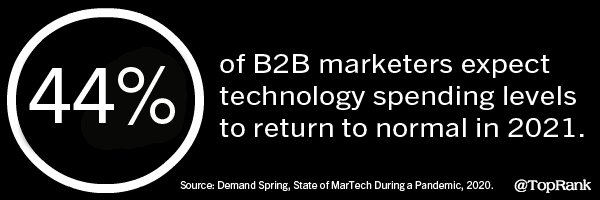
    Some 44 percent of B2B marketers expect marketing technology spending levels to return to normal in 2021, while 19 percent have invested in communication technologies during the pandemic — two of several insights of interest to digital marketers in recently-released survey data. MarketingProfs


    Instagram Tests a New Way for Users to React to Stories Without Sending a DM
    Facebook-owned Instagram has conducted limited testing of a new option allowing users to react to Instagram Stories on the frame of a story, rather than by the existing method of sending a direct message to the publisher of the story content — a move that could lead to new audience interaction opportunities for marketers. Social Media Today


    2020 November 13 Statistics ImageTwitter launches carousel ads to drive web traffic, app installs
    Twitter has released a new advertising option that will allow marketers the ability to include up to six videos or images in a new carousel ad format, Twitter recently announced. The firm also released accompanying statistics showing that testing of the new format resulted in a 15 percent greater click-through-rate on average. Mobile Marketer

    Facebook Tests New Options to Add Motion Effects to Still Images in Feed
    Facebook has tested new visual effect options that add several video-like motion elements to static imagery, with the new image movement features differing from the social media giant’s existing simulated 3D and animated image options. Social Media Today


    Research: Small Wins Can Make a Big Impact on Gender Equality
    The Harvard Business Review takes a look at some of the methods that can help in closing the perception gap, along with recently released health technology industry survey data examining how people can work towards being on the same gender equality page. Harvard Business Review


    The 2021 B2B Buying Disconnect [Report]
    46 percent of B2B technology buyers have felt that there are too many social media ads, with 30 percent noting that they prefered targeted ads, according to recently-released B2B buyer survey data. The report also showed that the most trusted sources of information buyers use include product demonstrations, vendor product websites, and user reviews. TrustRadius


    ON THE LIGHTER SIDE:


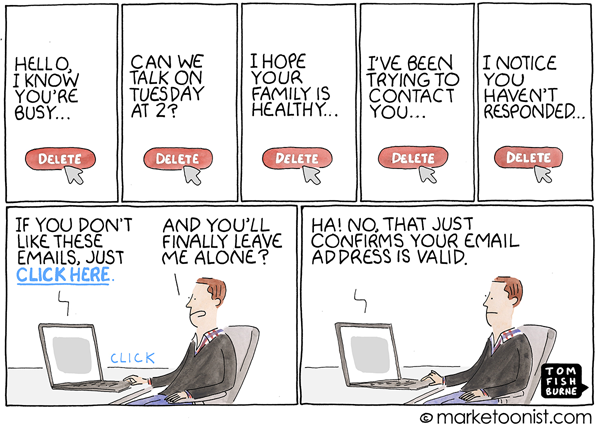
    2020 November 13 Marketoonist ComicA lighthearted look at “lead nurturing isn’t a numbers game” by Marketoonist Tom Fishburne — Marketoonist

    Amid the Uncertainty, There’s Room for Levity in Ads — ANA


    TOPRANK MARKETING & CLIENTS IN THE NEWS:


    • Lane R. Ellis / TopRank Marketing — Can You Create a Meaningful Experience in a Virtual Conference? — Timothy Hughes

    Have you found your own favorite B2B marketing story from the past week of industry news? Please let us know in the comments below.


    Thank you for joining us for our weekly B2B marketing news, and we hope that you will return again next Friday for another round-up of the most relevant B2B and digital marketing industry news. In the meantime, you can follow us at @toprank on Twitter for even more timely daily news.


    The post B2B Marketing News: B2B Buying Disconnect Study, Google’s SERP Video Carousels, B2B Event ROI Data, & Instagram’s New Story Reactions appeared first on B2B Marketing Blog – TopRank®.


  • B2B Marketing News: B2B Marketers Face Rising Content Demands, Google’s Mobile Voice Assistant, Performance Marketing Budgets Grow, & The Hyper-Relevant Ad Balancing Act

    B2B Marketing News: B2B Marketers Face Rising Content Demands, Google’s Mobile Voice Assistant, Performance Marketing Budgets Grow, & The Hyper-Relevant Ad Balancing Act

    B2B marketers are struggling to produce enough content amid the pandemic
    35 percent of B2B marketers have trouble producing the content needed to reach and engage audiences, while 68 percent are confident with their approach to content marketing, and only some 8 percent said they were able to attribute return on investment (ROI) to their content plan, according to recently-released survey data. The Drum

    Google Launches Updated Google Analytics, Including Improved Reporting and Data Tracking Options
    Google has given a significant overhaul to its popular Google Analytics website traffic analysis platform, adding a smarter artificial intelligence (AI)-infused approach including new insights such as churn probability and a variety of additional new predictive metrics, the search giant recently announced. Social Media Today

    WordPress can now turn blog posts into tweetstorms automatically
    WordPress has rolled out a new feature that allows entire posts created in the content management system to be shared and discussed on Twitter, including accompanying images and video, with support for multiple Twitter accounts, the firm recently announced. TechCrunch

    Facebook & Instagram Drop Support For WordPress Embeds
    Facebook and its Instagram platform will both cease supporting the traditional and widespread form of WordPress embedding, as unauthenticated embeds won’t work after an October 24 API update — a change aimed at driving publishers to create Facebook Developer accounts and use the oEmbed embedding format, Facebook announced recently. Search Engine Journal

    Marketers Got Hyper-Relevant Advertising Messages Wrong, Study Finds
    Brands achieve a 26.7 percent higher chance of gaining new customers when they target using a goal-driven advertising message mindset compared to an item-driven one, according to recently-released survey data that points out possible consequences of overly-specific ad targeting. MediaPost

    Google Podcasts Manager shows you search impressions and clicks from Google Search
    Google has launched a podcast performance monitoring and reporting system — Google Podcasts Manager — that shows how people find podcasts and what their listening habits are, among other new podcast-related data, Google recently announced. Search Engine Land

    2020 October 16 Statistics Image

    Key Takeaways From Congress’ Digital Competition Report
    Amazon, Apple, Facebook and Google are being urged to implement changes that would promote increased interoperability when it comes to digital advertising, and Adweek takes a look at some of the findings from the nearly 450-page U.S. House Judiciary Committee’s Antitrust Subcommittee report. Adweek

    YouTube Tests Product Tags in Selected Creator Videos as Part of Larger Shift Towards eCommerce
    YouTube has begun testing interactive product tags within certain videos, including new integration with Shopify that could lead to more streamlined clickable products within video content, the video giant recently announced. Social Media Today

    Google Assistant Opens, Searches, Completes Functions In Mobile Apps Using Voice
    Google has enhanced its Google Assistant service with new voice search features for users of Android apps, including functionality to post to social media platforms, the firm recently announced. MediaPost

    Performance Marketing Budgets to Increase as Marketers Chase ROI
    42 percent of B2B marketers plan to increase budgeting for performance marketing initiatives by up to 20 percent over the next year, and 18 percent say they will increase those budgets by over 20 percent — two of several items of interest to digital marketers in recently-released survey data. MarketingCharts

    ON THE LIGHTER SIDE:

    2020 October 16 Marketoonist Comic

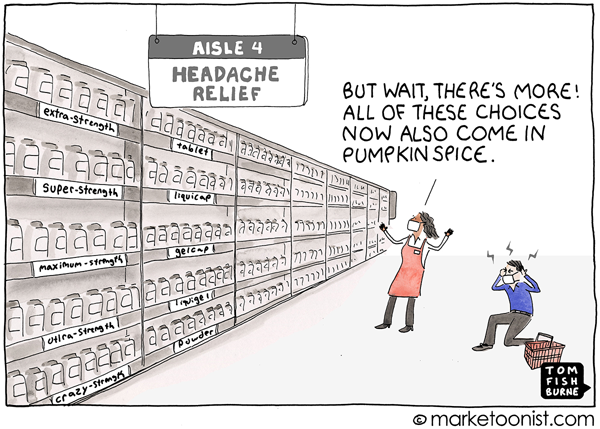
    A lighthearted look at “product choice overload” by Marketoonist Tom Fishburne — Marketoonist

    Coworker’s Sly Smile In Zoom Meeting Suggests Separate Chat Happening Right Now — The Onion

    TOPRANK MARKETING & CLIENTS IN THE NEWS:

    • Lee Odden — Roundup Debate on why people follow influencers — DearMishuDad
    • Lee Odden — The Employees as Influencers – Insights from Adobe — Jason Falls
    • Nick Nelson — 10 Important Building Blocks for Small Business Success — Small Business Trends
    • Lee Odden / TopRank Marketing — The State of B2B Influencer Marketing [Research] — V3Broadsuite

    Have you found your own top marketing stories from the past week of industry news? Please let us know in the comments below.

    Thank you for taking the time to join us for the weekly B2B marketing news, and we hope that you will come back again next Friday for another look at the most relevant B2B and digital marketing industry news. In the meantime, you can follow us at @toprank on Twitter for even more timely daily news.

    The post B2B Marketing News: B2B Marketers Face Rising Content Demands, Google’s Mobile Voice Assistant, Performance Marketing Budgets Grow, & The Hyper-Relevant Ad Balancing Act appeared first on B2B Marketing Blog – TopRank®.

  • B2B Marketing News: Rising B2B Ad Spend, Enterprise Chatbot Usage Doubles, B2B’s Purpose Gap, & New Tools From Google & Facebook

    B2B Marketing News: Rising B2B Ad Spend, Enterprise Chatbot Usage Doubles, B2B’s Purpose Gap, & New Tools From Google & Facebook

    Trends to follow in 2020

    US B2B Digital Advertising 2020
    B2B advertisers are relying more than ever before on paid ads, with a 22.6 percent increase for 2020 in B2B digital ad spending, contributing to a total spend that is expected to top $8 billion in the U.S. alone by the end of the year, according to newly-released forecast data of interest to digital marketers. eMarketer


    The ‘Purpose Gap’ Facing Many B2B Brands
    86 percent of senior-level B2B professionals see clear brand purpose articulation as important, however just 24 percent see activated purpose within their organization — two of several insights of interest to online marketers in new survey data from the Association of National Advertisers (ANA) and others. MarketingProfs


    How Bad Data Hurts B2B Companies
    88 percent of B2B marketers see quality data as important in executing a successful account-based-marketing (ABM) strategy, while some 27 percent aren’t certain how much of their data is accurate, according to recently-released survey data. Demand Gen Report


    Chatbot Usage Has Nearly Doubled in B-to-B Marketing This Year
    The use of chatbots in conversational marketing has risen 92 percent year-over-year, while live chat usage expanded by some 35 percent and social media interactions grew by 31 percent over the same period, according to recently-released survey data. Adweek


    Facebook launches Facebook Business Suite, an app for managing business accounts across Facebook, Instagram and Messenger
    Facebook has rolled out its tool for businesses to manage multiple Instagram, Facebook and Messenger profiles and pages in a unified location, with the release of its Facebook Business Suite utility, featuring post scheduling, ad creation, and insight data, the social media giant recently announced. TechCrunch


    Global brands advance towards ‘holy grail’ of cross-media measurement
    An ambitious global cross-media measurement proposal framework featuring a new publisher log-based solution utilizing Virtual ID (VID) has been put forth as part of a major push by the World Federation of Advertisers (WFA) and brands, the WFA’s Cross-Media Working Group recently announced. The Drum


    2020 September 25 Statistics ImageGoogle Combines Custom Affinity and Custom Intent Into Custom Audiences
    Google has rolled out changes giving advertisers new Google Ad audience features across display, YouTube and discovery campaigns, refining and combining previously separate audience intent and affinity tools, the search giant recently announced. Search Engine Journal

    LinkedIn launches Stories, plus Zoom, BlueJeans and Teams video integrations as part of wider redesign
    LinkedIn (client) has rolled out its ephemeral video and photo LinkedIn Stories feature, expanded platform search functionality, and video chat for direct messaging — three of an array of new additions of interest to digital marketers, the firm recently announced. TechCrunch


    New open source robots.txt projects
    Google has released a specification testing tool for websites seeking to adhere to its Robots Exclusion Protocol, along with a parsing and matching utility for improved robots.txt web crawler indexing information, the search film recently announced. Google Webmaster Central Blog


    What Should B2B Vendor Websites Focus on as the Pandemic Affects Purchase Behavior?
    68 percent of B2B buyers say that their purchase cycles have lengthened since 2019, with the most common buying journeys lasting between one and six months, while 53 percent consider web search a top research method, followed by 41 percent who consider vendor websites a top evaluation method, according to recently-released data. MarketingCharts


    ON THE LIGHTER SIDE:


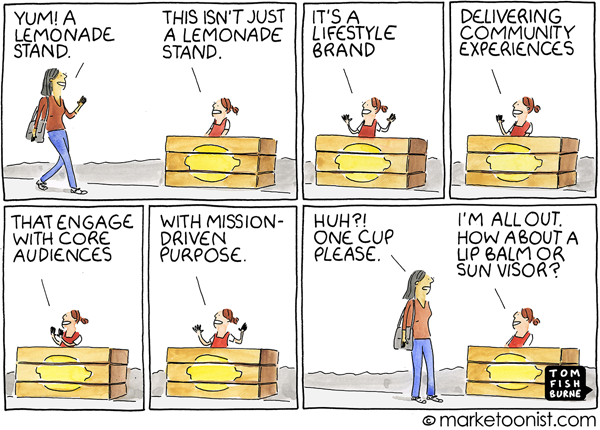
    2020 September 25 Marketoonist ComicA lighthearted look at “lifestyle brands” by Marketoonist Tom Fishburne — Marketoonist
    Overwatered Houseplants Hoping Woman Goes Back to Work Soon — The Hard Times

    TOPRANK MARKETING & CLIENTS IN THE NEWS:


    • Lee Odden — Stop Telling The Same Old Story — Mark Armstrong
    • Nick Nelson — 10 Tips for Changing the Way You Think About Your Small Business — Small Business Trends
    • TopRank Marketing — Why Convenience Is Essential — Forbes

    Have you found your own key marketing stories from the past week of news? Please let us know in the comments below.


    Thank you for taking the time to join us for the weekly B2B marketing industry news, and we hope that you will return again next Friday for another look at the most relevant B2B and digital marketing industry news. In the meantime, you can follow us at @toprank on Twitter for even more timely daily news.


    The post B2B Marketing News: Rising B2B Ad Spend, Enterprise Chatbot Usage Doubles, B2B’s Purpose Gap, & New Tools From Google & Facebook appeared first on Online Marketing Blog – TopRank®.