Category: Influencer Marketing

  • The Impact of Influencer Marketing on Fintech Brand Awareness

    The Impact of Influencer Marketing on Fintech Brand Awareness

    In today’s digital age, where social media dominates the marketing landscape, the fusion of fintech and influencer marketing has emerged as a powerful strategy for boosting brand awareness. But what exactly is influencer marketing, and how does it affect the fintech industry? 

    Let’s take a look at the world of fintech marketing, explore the dynamics of influencer marketing, and uncover how this strategy is reshaping the landscape of fintech brand awareness.

    Table of Contents

    1 Understanding Fintech Marketing

    2 The Rise of Influencer Marketing in Fintech

    3 Leveraging Influencers in Fintech Marketing

    4 Key Benefits of Fintech Influencer Marketing

    5 Crafting a Winning Fintech Influencer Strategy

    6 Case Studies: Successful Fintech Influencer Campaigns

    7 Measuring Success: Metrics for Fintech Brand Awareness

    8 Overcoming Challenges in Fintech Influencer Marketing

    9 The Future of Fintech Marketing

    10 Conclusion

     
    1. Understanding Fintech Marketing

    Before considering the impact of influencer marketing on fintech brand awareness, it’s essential to grasp the essence of fintech marketing itself. Fintech, short for financial technology, encompasses a wide range of innovative solutions that disrupt traditional financial services. 

    Fintech companies leverage technology to offer efficient, user-friendly alternatives to traditional banking, investing, and payment systems.

    1. The Rise of Influencer Marketing in Fintech

    In recent years, influencer marketing has gained significant traction across various industries, including fintech. Influencer marketing involves collaborating with individuals who have a substantial following and influence on social media platforms. These influencers endorse products or services to their audience, leveraging their credibility and trust to drive engagement and conversions.

    1. Leveraging Influencers in Fintech Marketing

    According to a study done by Qualtrics and Credit Karma, 56% of Gen Z and Millennials intentionally seek out financial advice through social platforms.
    Fintech companies can harness the power of influencers to reach this target audience more effectively. By partnering with influencers who specialize in finance, technology, or related fields, fintech brands can tap into existing communities of engaged followers who are interested in financial innovations.

    1. Key Benefits of Fintech Influencer Marketing

    Influencer marketing offers several advantages for fintech brands:

    Enhanced Credibility: When influencers endorse a fintech product or service, it lends credibility and trustworthiness to the brand, especially among skeptical consumers.

    Expanded Reach: Influencers have dedicated followers who trust their recommendations, allowing fintech brands to expand their reach and tap into new markets.

    Authenticity: Authenticity is crucial in the fintech industry, and influencers can humanize the brand by sharing their genuine experiences and insights.

    1. Crafting a Winning Fintech Influencer Strategy

    To maximize the impact of influencer marketing on fintech brand awareness, companies must develop a comprehensive strategy. This involves identifying the right influencers, defining clear objectives, and creating compelling content that resonates with the target audience.

    Here is a sample 90-day fintech influencer marketing strategy that outlines a structured approach to collaborating with influencers, from initial research and outreach to campaign execution, optimization, and evaluation.

    Day

    Activity

    Day 1-10

    Research and Identification: Conduct thorough research to identify potential influencers in the fintech niche. Analyze their audience demographics, engagement rates, and content relevance.

    Day 11-20

    Outreach and Engagement: Reach out to selected influencers with personalized messages expressing interest in collaboration. Engage with them on social media platforms to establish rapport and familiarity.

    Day 21-30

    Negotiation and Agreement: Initiate negotiations with interested influencers regarding collaboration terms, including compensation, content requirements, and campaign objectives. Draft and finalize influencer contracts.

    Day 31-40

    Content Creation: Collaborate with influencers to develop engaging content that highlights the fintech company’s products or services. Provide clear guidelines and creative direction while allowing influencers to infuse their unique style and voice.

    Day 41-50

    Campaign Launch: Launch the influencer marketing campaign across various social media platforms. Monitor campaign performance closely and address any issues or concerns promptly.

    Day 51-60

    Monitoring and Optimization: Continuously monitor key metrics such as engagement rates, website traffic, and conversion rates. Optimize the campaign based on performance insights and adjust strategies as needed to maximize results.

    Day 61-70

    Community Engagement: Encourage influencers to actively engage with their audience by responding to comments, hosting Q&A sessions, and facilitating discussions about the fintech brand.

    Day 71-80

    User-Generated Content: Encourage followers to create user-generated content related to the fintech brand and share it on social media platforms. Repurpose this content for additional marketing initiatives.

    Day 81-90

    Evaluation and Analysis: Conduct a comprehensive evaluation of the influencer marketing campaign’s overall impact and ROI. Analyze feedback from influencers and audience reactions to identify strengths, weaknesses, and areas for improvement.

    1. Case Studies: Successful Fintech Influencer Campaigns

    Several fintech companies have successfully leveraged influencer marketing to boost brand awareness. For example, a leading digital payment platform collaborated with popular finance influencers to promote its mobile app, resulting in a significant increase in app downloads and user engagement.

    Also, as quoted in the Times of India, The #DoubleBenefitFromRBLBank campaign is one example. Collaborating with Sameera Reddy and Ujjawal Pahwa, the fintech influencer marketing campaign targeted working professionals and home-makers across India to stunning effect. The campaign reached almost 670,000 people and garnered 770,000+ engagements.

    1. Measuring Success: Metrics for Fintech Brand Awareness

    Measuring the success of influencer marketing campaigns is essential for refining strategies and optimizing performance. Key metrics for evaluating fintech brand awareness include website traffic, social media engagement, brand mentions, and conversion rates. The following listicle will provide you with the top KPIs required for measuring a successful FinTech influencer marketing campaign. 

    Website Traffic:

    • Monitor the volume of traffic to your fintech company’s website over time.
    • Analyze website traffic sources to identify which channels drive the most visitors.
    • Track changes in website traffic patterns in response to marketing initiatives or external factors.

    Social Media Engagement:

    • Measure engagement metrics such as likes, shares, comments, and clicks on social media posts.
    • Evaluate the reach and impact of your fintech brand’s social media content.
    • Monitor audience interactions and sentiment to gauge brand perception and engagement levels.

    Brand Mentions:

    • Use social listening tools to track mentions of your fintech brand across social media platforms, forums, and blogs.
    • Analyze the frequency and context of brand mentions to understand how your brand is perceived and discussed online.
    • Identify influencers, advocates, and detractors who mention your brand and assess their influence on brand awareness.

    Conversion Rates:

    • Measure conversion rates for various marketing channels, campaigns, and landing pages.
    • Track the percentage of website visitors who complete desired actions, such as signing up for a demo, requesting more information, or making a purchase.
    • Analyze conversion funnels to identify bottlenecks and optimize the user journey for improved conversion rates.
    1. Overcoming Challenges in Fintech Influencer Marketing

    While influencer marketing offers numerous benefits, it also comes with challenges. Fintech brands may face issues such as finding the right influencers, ensuring compliance with regulations, and maintaining authenticity amidst sponsored content. Here are the top challenges and best practices for overcoming these challenges shared by top experts at TIQ Digital. 

    Challenges:
    1. Finding the Right Influencers: Identifying influencers who resonate with the fintech audience and align with the brand’s values can be challenging.
    2. Regulatory Compliance: Ensuring compliance with regulations such as disclosure requirements for sponsored content and consumer protection laws can be complex.
    3. Maintaining Authenticity: Striking a balance between promotional content and authenticity is crucial to maintaining credibility with the audience.
    4. Measuring ROI: Determining the return on investment (ROI) of influencer marketing campaigns and attributing conversions to specific influencers can be difficult.
    Expert Solutions from TIQ Digital:
    1. Thorough Research and Vetting: Conduct comprehensive research to identify influencers with relevant expertise and engaged audiences. Vet potential influencers based on their content quality, audience demographics, and engagement metrics.
    2. Legal Guidance and Compliance Checks: Seek legal guidance to ensure compliance with relevant regulations and guidelines governing influencer marketing. Implement robust processes for reviewing influencer content to ensure compliance with disclosure requirements and consumer protection laws.
    3. Authentic Storytelling: Encourage influencers to share authentic stories and experiences related to the fintech brand. Provide influencers with creative freedom while ensuring that branded content aligns with the brand’s messaging and values.
    4. Utilize Tracking and Attribution Tools: Implement tracking and attribution tools to measure the impact of influencer marketing campaigns on key performance metrics such as website traffic, conversions, and ROI. Use unique tracking links, promo codes, or referral codes to attribute conversions to specific influencers and evaluate campaign effectiveness.
    1. The Future of Fintech Marketing

    As the fintech industry continues to evolve, influencer marketing is poised to play an increasingly significant role in shaping brand awareness and consumer perceptions. Fintech companies must adapt to changing trends and embrace innovative marketing strategies to stay ahead of the competition.

    1. Conclusion

    In conclusion, influencer marketing has emerged as a potent tool for enhancing fintech brand awareness in today’s digital landscape. By partnering with influencers, fintech companies can amplify their message, build credibility, and connect with their target audience on a deeper level. As the fintech industry continues to grow, leveraging influencer marketing effectively will be key to staying competitive and driving sustainable growth. Contact us at TIQ Digital, a leading fintech marketing agency in India. 

    FAQs

    1. What is influencer marketing, and why is it important for fintech companies?

    Influencer marketing involves collaborating with individuals who have a significant following on social media to promote products or services. For fintech companies, influencer marketing is important because it helps build credibility, expand reach, and humanize the brand.

    1. How can fintech companies find the right influencers to partner with?

    Fintech companies can find the right influencers by conducting thorough research, assessing their audience demographics and engagement rates, and ensuring alignment with the brand’s values and objectives.

    1. What are some key metrics for measuring the success of influencer marketing campaigns in fintech?

    Key metrics for measuring the success of influencer marketing campaigns in FinTech include website traffic, social media engagement, brand mentions, conversion rates, and ROI (Return on Investment).

    1. How can fintech brands maintain authenticity in influencer marketing campaigns?

    Fintech brands can maintain authenticity in influencer marketing campaigns by ensuring transparency, encouraging genuine endorsements, and collaborating with influencers who resonate with their target audience.

    1. What are the regulatory considerations for fintech influencer marketing?

    Fintech companies must ensure compliance with relevant regulations, such as disclosure requirements for sponsored content and adherence to consumer protection laws, to avoid legal issues and maintain trust with consumers.
  • 5 Ways Marketing Automation Can Boost Fintech Lead Generation

    5 Ways Marketing Automation Can Boost Fintech Lead Generation

    Introduction

    In the fiercely competitive landscape of fintech, generating high-quality leads is crucial for sustained growth and success. Fintech companies are now utilizing marketing automation to revolutionize their lead generation efforts, leading to impressive outcomes. This article delves into five key strategies that leverage marketing automation to propel fintech lead generation to new heights.

    Understanding Fintech Lead Generation

    Fintech lead generation is the process of identifying and nurturing potential clients interested in financial technology solutions. However, this process is not without its challenges. The fintech industry is highly competitive, and consumer behaviors are constantly evolving. Marketing automation plays a pivotal role in overcoming these obstacles by automating repetitive tasks, streamlining workflows, and delivering personalized experiences to leads.

    Automated Lead Nurturing Sequences

    One of the most impactful ways marketing automation boosts fintech lead generation is through automated lead nurturing sequences. These sequences allow fintech companies to deliver personalized messages to leads across multiple channels, including email, social media, and content marketing platforms. Companies can improve their lead generation process by regularly monitoring important performance metrics and using data analysis to make necessary adjustments. This will help ensure that leads are getting the right information at the right time, ultimately boosting the chances of converting them into customers.

    Data-Driven Targeting Strategies

    Data-driven targeting strategies are another essential component of successful fintech lead generation. By leveraging customer behavior analysis and AI-powered algorithms, fintech companies can identify and prioritize high-quality leads with precision. Predictive analytics further enhance this process by forecasting consumer actions and enabling companies to tailor their messaging accordingly. This data-driven approach not only increases engagement and conversion rates but also ensures that fintech companies allocate marketing resources efficiently.

    Social Media Automation for Outreach

    Social media automation is a powerful tool for fintech lead generation. Fintech companies can maintain a consistent online presence and nurture relationships with leads throughout their buyer’s journey by automating posts, scheduling content, and engaging with followers. Personalized outreach strategies and prompt responses to inquiries demonstrate expertise and build trust with potential clients, ultimately increasing the likelihood of conversion.

    Lead Nurturing Workflows

    Effective lead nurturing workflows are essential for converting leads into customers in the fintech industry. Marketing automation enables companies to monitor and analyze the success of their lead nurturing campaigns in real-time. By leveraging sophisticated automation tools, fintech companies can personalize communication, target outreach efforts, and maximize conversions. Continuous evaluation and optimization of lead nurturing workflows ensure that companies stay ahead of the curve and maintain a competitive edge in the market.

    Integration with CRM for Seamless Follow-up

    Seamless follow-up is critical for converting leads into customers in fintech lead generation. Integration with Customer Relationship Management (CRM) systems enables fintech companies to streamline their lead management processes and prioritize leads effectively. AI-powered analytics further enhance this process by identifying high-potential leads and guiding follow-up actions. Real-time data synchronization ensures that leads receive timely and tailored communication, increasing the likelihood of conversion.

    FAQs

    Marketing automation streamlines lead generation processes, allowing fintech companies to attract, nurture, and convert leads efficiently.

    • How does personalized messaging enhance lead nurturing?

    Personalized messaging builds rapport with leads, demonstrating an understanding of their needs and preferences, ultimately increasing the likelihood of conversion.

    • Why is data-driven targeting important in fintech?

    Data-driven targeting enables fintech companies to identify and prioritize high-quality leads, ensuring that marketing efforts are focused on the most promising opportunities.

    • What are the benefits of social media automation for fintech companies?

    Social media automation saves time and resources while maintaining a consistent online presence, fostering engagement with leads, and driving traffic to conversion points.

    • How does CRM integration improve follow-up in lead generation?

    CRM integration streamlines lead management and prioritization, ensuring that follow-up actions are timely and targeted, maximizing conversion opportunities.

    • How can fintech companies optimize their lead nurturing workflows?

    Fintech companies can optimize lead nurturing workflows by continuously monitoring performance metrics, refining strategies based on insights, and implementing personalized communication tactics.

    Conclusion

    Marketing automation is a game-changer in fintech lead generation, offering unparalleled efficiency and effectiveness. By implementing these five strategies, fintech companies can unlock new opportunities, drive growth, and stay ahead in the competitive landscape. Embrace automation and revolutionize your approach to lead generation today.

  • Power of Digital Technology to Engage & Influence Customers

    Power of Digital Technology to Engage & Influence Customers

    As per research, 66 percent of SME owners are personally responsible for overseeing three or more areas of their organization’s activities, including marketing. While staying ahead in your business may appear to be a difficult task. However, by applying the power of digital technology in the right way, you’ll be able to increase brand awareness, also accelerating your business growth.


    As digital technologies progress, there are more platforms, mediums, and touchpoints than ever before, providing opportunities to connect with your target audience on a personal level and also increasing your complexity. Let’s look at few ways to streamline:


    1. Marketing Efforts should be focused in a specific direction for achieving the relevant target

    When you’re running a busy small business, time is always of the essence. The foundation of your digital marketing success will be your ability to select the marketing channels that will have the greatest impact.

    For example, instead of spreading your efforts across multiple social media platforms, third-party eCommerce sites, and landing pages, you could focus on your email marketing communications and your Instagram channel, in addition to your website.


    Because digital technology is dynamic, these options may change over time, and as your business grows, so will your ability to broaden your marketing efforts. However, by focusing your efforts on two to three core marketing channels at first, you will be able to generate a focused buzz, and new prospects for your brand.


    2. Well defined Social Strategy and alignment with overall Business strategy

    95% of adults between 18 to 34 are likely to follow and interact with a brand on social media. Furthermore, 73% of marketers say social media marketing has been an extremely effective part of their business strategy.


    Sharing posts using a calendar tool to get likes and comments is not a well-defined social strategy. Each platform has a unique persona and the audience is different on each. So effectively the message should also be customized as per the platform. Despite the clear cut of each platform’s nature, roughly half of today’s SMEs aren’t taking advantage of the segmentation.


    In order to get the most out of your company’s social media marketing efforts, you should take your time deciding on one platform to focus the majority of your efforts.


    Once you’ve set up or optimized your social media accounts (selected eye-catching profile images, verified that all links are working, creating relevant, punchy bio copy, etc.), you should begin building awareness by ‘listening to your target audience’s conversations on that platform, participating in dialogues where appropriate, and using this data to create engaging relevant content.


    3. Optimize your Email Marketing Efforts

    While many people believe that email marketing is a dying art, this couldn’t be the truth. Email, when used effectively, can engage and influence consumers in a big way, making it a valuable asset to any aspiring SME.

    In fact, 73 percent of millennials prefer email communications from businesses.

    Also, 99 percent of people check their email every day. Having said that, there is a lot of room for connecting with your audience through email communications.

    To build a successful email marketing strategy for your business, you will need to consider the following elements:

    • Understand your audience.
    • Plan your goals and campaigns.
    • Choose the right email marketing tools and software.
    • Create engaging, relevant and value-driven content for your audience.
    • Monitor, track and measure your results.

    Emails are also used in setting up targeted ad campaigns as discussed later in the article. Know more about our email funnel generation process to increase your database.


    4. Partnerships and Tie-Ups with Small Scale Influencers or supporting MSMEs

    Partnering for joint webinars with complementing MSMEs or Influencer marketing are very effective ways for you to broaden your commercial reach and grow your audience. Typically, this is accomplished through the use of cross-promotion or paid association.


    With rising fakes in influencer marketing, the SMEs should be focused and concerned only where the real value lies for them, mostly from our understanding, sourcing small-scale influencers in your industry or niche. At present, 94% of marketers believe that transparency and authenticity are key factors of influencer marketing success.


    Perhaps, by working to forge relationships with these MSMEs and smaller-scale digital influencers in your niche, you stand to cut through the noise and connect with prospects that are likely to be highly engaged in what you have to offer or what you have to say.


    5. Embrace Paid Advertising (with a balanced approach)

    Another business-boosting avenue you can take as an SME is paid advertising. By embracing the potential of a balanced pay-per-click (PPC) strategy through Google, Facebook, and the recently updated, Amazon Ads platform, you’ll be able to connect with a wider online audience.


    Studies suggest that 75% of people that click on paid ads confirm that search ads make it easier to find relevant information. Based on that notion, a well-targeted paid ad has the power to encourage a healthy level of conversions.


    There are a variety of paid advertising options available, but Google’s paid advertising platform may be the most effective for increasing your search engine visibility. At this point we would also like to highlight that paid ads (performance marketing) have their disadvantages as well, the foremost being not able to build a brand.


    A lot of marketers make the mistake of relying just on performance marketing to generate leads and acquire customers to meet the targets. In the long run, a brand also needs to be set up in parallel so that the customer acquisition cost (CAC) goes down over a period of time. Running a branding and awareness campaign should also be part of the ad spending budget. Discuss more about the golden ratio for your business’s ad spend with us.

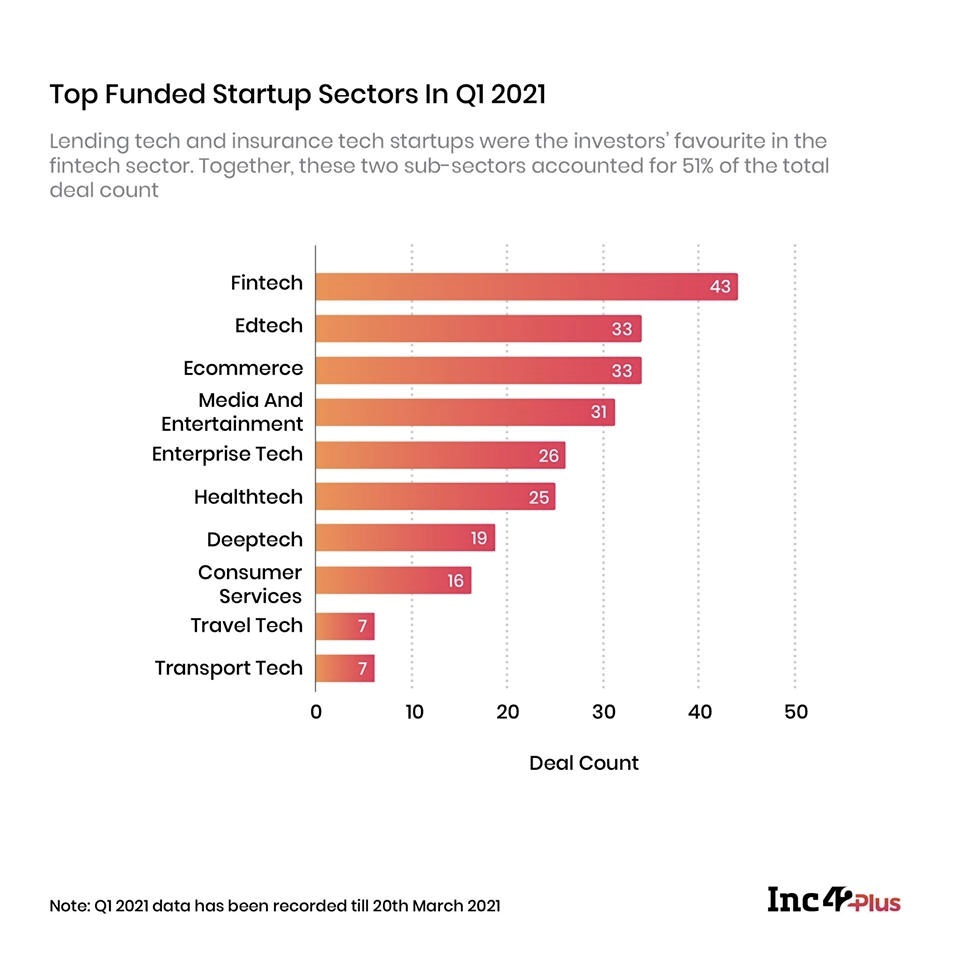
    Image Source: Inc4Plus

    Finally,  as per the figure, you can observe that the top-funded startup sectors in 2021 are mostly related to companies using digital technology as the primary part of their business. Observing this trend we can easily say that this paves a way for all MSME businesses to focus on the implementation of the above points in the correct way. For more guidance connect with us at info@technocratiq.com


    Conclusion

    The possibilities for creating engaging, inspiring marketing campaigns are limitless in the digital age. Take the guidance and devote time to connect on a personal level with your prospects, focus your efforts, and take a strategic approach to your business activities.


    TIQ aims for you to grow your market online. For questions or to get started with digital marketing services, drop us an email at info@technocratiq.com or call +91 798 25 34 881.

  • What is Influencer Marketing

    What is Influencer Marketing

    Do you remember the early days of the internet? It was full of pop-up ads and disruptions that were annoying and, frankly, caused a lot of people to simply abandon web pages in favor of some other site with less advertising. But advertising is important for companies because a lot of people are still browsing websites. But there’s been an evolution in how companies are trying to connect with others on the internet. One result of that is what’s called influencer marketing.

    Influencer marketing is when companies work with those who have a wide audience and a lot of, well, influence. It’s not a traditional ad message, but it is still a way to promote something, helping people know about and believe in a product because they know about and believe in a person. What is influencer marketing and what can you do to help your company advance? This graphic explains it.


    What is Influencer Marketing When Should You Use It

    Via Salesforce

  • For Successful B2B Marketers The Engine of Influence is Always On #B2BIMReport

    For Successful B2B Marketers The Engine of Influence is Always On #B2BIMReport

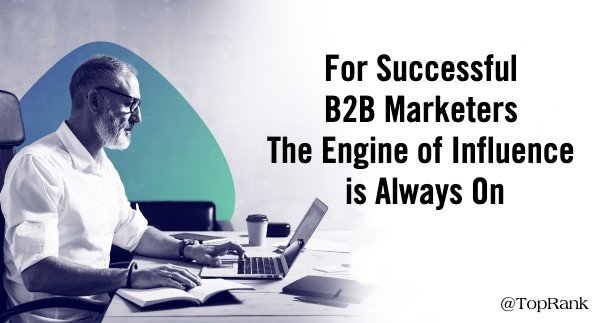
    As the need for B2B brands to reach and connect authentically with customers rises, B2B influencer marketers are evolving from transactional and intermittent campaigns to more relationship driven, Always-On Influencer engagement programs as our research from the 2020 State of B2B Influencer Marketing report found:

    • 19% are piloting
    • 25% run periodic campaigns
    • 34% use an Always-On approach

    Transactional campaign approaches are hard pressed to develop brand loyalty and advocacy. That’s why, with 84% of B2B marketers focused on building brand awareness with their influencer marketing efforts, that ongoing influencer engagement has become essential for creating vested relationships that inspire more qualitative activations and brand advocacy.


    The Engine of Influence needs to run ongoing in order to win relationships with the most trusted voices. Our findings amongst B2B marketers have found several interesting insights when it comes to an Always-On approach to influencer relations compared to campaigns, the best practices followed and what Always-On influence in action really looks like.


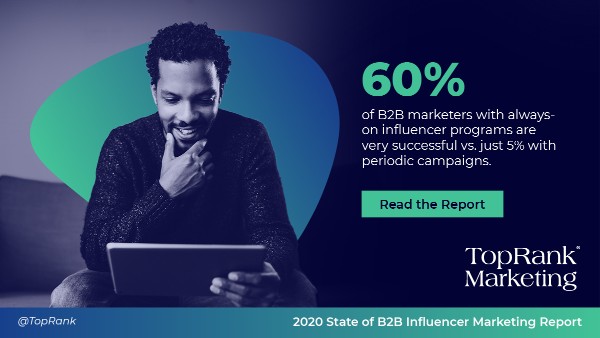
    60% of B2B marketers who use Always-On Influencer Marketing programs are very successful vs. 5% who only use periodic campaigns.

    Influencer Marketing is a Relationship Business

    Distractions and competition for attention with B2B customers are at an all-time high. At the same time, B2B marketers are challenged to find the right strategies to maximize resources and marketing impact. Our research found that 76% of B2B marketers find the strategy of working with influencers through Always-On engagement or a combination of Always-On and campaigns, delivers results.


    In the world of business, many decisions are made based on emotion, brand strength and the trust of expert voices. B2B marketers who build relationships with trusted experts understand the value of having brand advocates engage authentically with hard to reach audiences that increasingly discount brand communications. An Always-On approach to influencer marketing provides a framework for finding, engaging and elevating relationships with those very experts that customers trust and want to hear from.


    The Always-On Imperative for B2B Brands

    In today’s uncertain environment, brand reach and credibility are more important than ever. Some of the top B2B brands in the world have invested in developing communities of industry experts through Always-On influencer marketing that they can count on for social engagement, event activations, and brand advocacy.

    Our research found that B2B marketers using an Always-On influencer marketing strategy are seeing important benefits including:


    • 75% Increased views of brand content
    • 60% Increased share of voice
    • 55% Increased media mentions of brand
    • 50% Increased brand advocacy

    Buyers want to trust the brands they work with and with brand trust at a low, it’s important for B2B companies to invest in relationships with credible experts that buyers do trust.


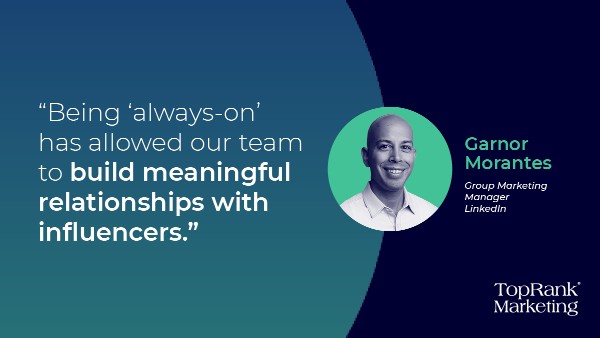
    Garnor Morantes Always-On Influence Quote

    Being “always-on” has allowed our team to build meaningful relationships with influencers. This approach means that the relationship ceases to be “transactional” (what can you do for us) when we’re in a state of ongoing activity. Because of this foundation, we are in a situation where, when urgency strikes, we’ve been able to immediately activate influencers, whether it be for private, direct, unfiltered feedback and consult, or for external, public-facing advocacy and amplification. B2B brands would be wise to adopt an always-on influencer engagement approach as they look to build true brand advocates.
    Garnor Morantes, Group Marketing Manager, LinkedIn

    To learn about how LinkedIn built trust and advocacy with Always-On Influence and achieving promising results including:

    • Nearly 2,000 brand mentions by influencers and their networks
    • 84M in potential reach from brand mentions by influencers
    • 200-450% above benchmark engagement on one social influencer activation

    see this Always-On Influencer Marketing case study.


    How Always-On Influence Drives Marketing Results

    Alway-On Influencer Marketing is the practice of ongoing relationship building, engagement and activation of a specified group of influencers to build community, content and brand advocacy that is of mutual value to the brand, its customers and the influencers.


    From a confidence standpoint, 94% of B2B marketers using an Always-On influencer engagement strategy believe influencer marketing will grow in importance over the next 12 months vs. 73% of marketers who focus on campaigns.


    That confidence is reflected in marketing budgets as well. 89% of B2B marketers implementing Always-On influencer programs expect their budgets to increase or remain the same vs. 73% for marketers running campaign based programs. 28% Always-On influencer programs spend more than $100,000 per year vs. 8% for marketers running campaigns.


    Always On Influencer Marketing is a strategic approach to creating communities of trusted experts that is relationship and content focused.

    Those relationships are nurtured over time through ongoing engagement and activations that create value for buyers, the brand and the influencers – it is truly an “everybody wins” approach to marketing.


    Then Engine of Influence is Always-On

    Influencer Marketing is a relationship business and an Always-On influencer engagement strategy helps B2B brands turn those connections with trusted experts into marketing results.


    60% of B2B marketers who use Always-On Influencer Marketing programs are very successful vs. 5% who only use periodic campaigns.

    Always-On Influencer Marketing elevates influencer engagement from mechanical to meaningful, from transactional to relationship focused. As a result, brands like LinkedIn are able to activate their community on-demand. “When urgency strikes, we’ve been able to immediately activate influencers,” says Garnor Morantes of LinkedIn,”B2B brands would be wise to adopt an always-on influencer engagement approach as they look to build true brand advocates.”


    An Always-On Influencer Marketing strategy creates a win for everyone. With a framework that goes beyond influencer content marketing campaigns to partnering with industry experts to drive conversations and advocacy, an Always-On approach builds brand awareness, and inspires customers to trust and engage with the business.


    This post is an excerpt from the 2020 State of B2B Influencer Marketing Report. To learn more about the current state of B2B Influencer Marketing, including strategies, tactics, challenges, software, operations, integration and predictions for the future, access our new report here.


    B2B Influencer Marketing Report 2020The post For Successful B2B Marketers The Engine of Influence is Always On #B2BIMReport appeared first on Online Marketing Blog – TopRank®.