Author: TIQ Team

  • 3 simple steps to find Blog Topics that improves your SEO

    3 simple steps to find Blog Topics that improves your SEO

    All businesses want theirwebsites to be at the top of trending and search results. There is constant pressure to generate ideas that will gain attention from some of the most perspicacious audiences out there. 


    You should target the topics which will help you to build better relationships with your audience, improve the customer experience, increase your authority, drive more people to your site, give you an edge over the competition, and increase conversions, which means more sales, more loyal customers, and more growth for your business.


    Grow your Business with TIQs Managed Business Solution Services


    SEO is the magic you have to work on your article in order to make Google very likely to include your post as one of the top results whenever someone searches for that keyword. Google looks at 200+ different factors when determining the ranking of websites and blogs that show up on their SERPs. They want to find content that is relevant to the user’s query, but that can also be trusted to provide value for the reader. 


    3 simple steps to find Blog topics that improve your SEO: 

    Step 1: Figure out what your readers want 

    When you figure out what questions your buyers or readers are asking, the process of creating an SEO-friendly blog is easy. 


    Step 2: Search for relevant keywords 

    Before you start writing, you have to do keyword research. If you want to dominate the search results, you’ll have to figure out which words your audience actually searches for. These are the topics you should write about. 


    Use a Keyword Research Tool

    Armed with your list of potential keywords, use a keyword research tool to examine the search volume and competitiveness of each term. The ideal is to find a keyword that has high search volume and low competition.


    Sites like SoovleJaayGoogle Search Console, and Ahrefs Keywords Explorer give you details on what users are searching for and how popular those queries are.


    Step 3: Supporting Research to ensure results 

    • Google Trends: what keywords are popular at any given time.  
    • Google Autosuggest: To use Google Autosuggest, enter your main Keyword in Google. 
    • Searches Related to: scroll down to the bottom of Google Search to the section called Searches Related To. 
    • People Also Ask Box: shows similar questions that are closely or directly related to your searched keyword. 
    • Discover Topics with Quora: Quora is a popular question and answer website and is a great place for you to find new topics for your blog. 
    • Answer The Public: Useful keyword research tool for discovering question-focused topics very easily. 
    • Search for Twitter Hashtags: You will find many ideas for your blog topics through trending hashtags on Twitter on a  daily basis.  

    Bookmark this page to following these simple steps to gain maximum advantage. For questions or to share your project details with us, drop us an email info@technocratiq.com or WhatsApp at +91-7982534881. 

  • Power of Digital Technology to Engage & Influence Customers

    Power of Digital Technology to Engage & Influence Customers

    As per research, 66 percent of SME owners are personally responsible for overseeing three or more areas of their organization’s activities, including marketing. While staying ahead in your business may appear to be a difficult task. However, by applying the power of digital technology in the right way, you’ll be able to increase brand awareness, also accelerating your business growth.


    As digital technologies progress, there are more platforms, mediums, and touchpoints than ever before, providing opportunities to connect with your target audience on a personal level and also increasing your complexity. Let’s look at few ways to streamline:


    1. Marketing Efforts should be focused in a specific direction for achieving the relevant target

    When you’re running a busy small business, time is always of the essence. The foundation of your digital marketing success will be your ability to select the marketing channels that will have the greatest impact.

    For example, instead of spreading your efforts across multiple social media platforms, third-party eCommerce sites, and landing pages, you could focus on your email marketing communications and your Instagram channel, in addition to your website.


    Because digital technology is dynamic, these options may change over time, and as your business grows, so will your ability to broaden your marketing efforts. However, by focusing your efforts on two to three core marketing channels at first, you will be able to generate a focused buzz, and new prospects for your brand.


    2. Well defined Social Strategy and alignment with overall Business strategy

    95% of adults between 18 to 34 are likely to follow and interact with a brand on social media. Furthermore, 73% of marketers say social media marketing has been an extremely effective part of their business strategy.


    Sharing posts using a calendar tool to get likes and comments is not a well-defined social strategy. Each platform has a unique persona and the audience is different on each. So effectively the message should also be customized as per the platform. Despite the clear cut of each platform’s nature, roughly half of today’s SMEs aren’t taking advantage of the segmentation.


    In order to get the most out of your company’s social media marketing efforts, you should take your time deciding on one platform to focus the majority of your efforts.


    Once you’ve set up or optimized your social media accounts (selected eye-catching profile images, verified that all links are working, creating relevant, punchy bio copy, etc.), you should begin building awareness by ‘listening to your target audience’s conversations on that platform, participating in dialogues where appropriate, and using this data to create engaging relevant content.


    3. Optimize your Email Marketing Efforts

    While many people believe that email marketing is a dying art, this couldn’t be the truth. Email, when used effectively, can engage and influence consumers in a big way, making it a valuable asset to any aspiring SME.

    In fact, 73 percent of millennials prefer email communications from businesses.

    Also, 99 percent of people check their email every day. Having said that, there is a lot of room for connecting with your audience through email communications.

    To build a successful email marketing strategy for your business, you will need to consider the following elements:

    • Understand your audience.
    • Plan your goals and campaigns.
    • Choose the right email marketing tools and software.
    • Create engaging, relevant and value-driven content for your audience.
    • Monitor, track and measure your results.

    Emails are also used in setting up targeted ad campaigns as discussed later in the article. Know more about our email funnel generation process to increase your database.


    4. Partnerships and Tie-Ups with Small Scale Influencers or supporting MSMEs

    Partnering for joint webinars with complementing MSMEs or Influencer marketing are very effective ways for you to broaden your commercial reach and grow your audience. Typically, this is accomplished through the use of cross-promotion or paid association.


    With rising fakes in influencer marketing, the SMEs should be focused and concerned only where the real value lies for them, mostly from our understanding, sourcing small-scale influencers in your industry or niche. At present, 94% of marketers believe that transparency and authenticity are key factors of influencer marketing success.


    Perhaps, by working to forge relationships with these MSMEs and smaller-scale digital influencers in your niche, you stand to cut through the noise and connect with prospects that are likely to be highly engaged in what you have to offer or what you have to say.


    5. Embrace Paid Advertising (with a balanced approach)

    Another business-boosting avenue you can take as an SME is paid advertising. By embracing the potential of a balanced pay-per-click (PPC) strategy through Google, Facebook, and the recently updated, Amazon Ads platform, you’ll be able to connect with a wider online audience.


    Studies suggest that 75% of people that click on paid ads confirm that search ads make it easier to find relevant information. Based on that notion, a well-targeted paid ad has the power to encourage a healthy level of conversions.


    There are a variety of paid advertising options available, but Google’s paid advertising platform may be the most effective for increasing your search engine visibility. At this point we would also like to highlight that paid ads (performance marketing) have their disadvantages as well, the foremost being not able to build a brand.


    A lot of marketers make the mistake of relying just on performance marketing to generate leads and acquire customers to meet the targets. In the long run, a brand also needs to be set up in parallel so that the customer acquisition cost (CAC) goes down over a period of time. Running a branding and awareness campaign should also be part of the ad spending budget. Discuss more about the golden ratio for your business’s ad spend with us.

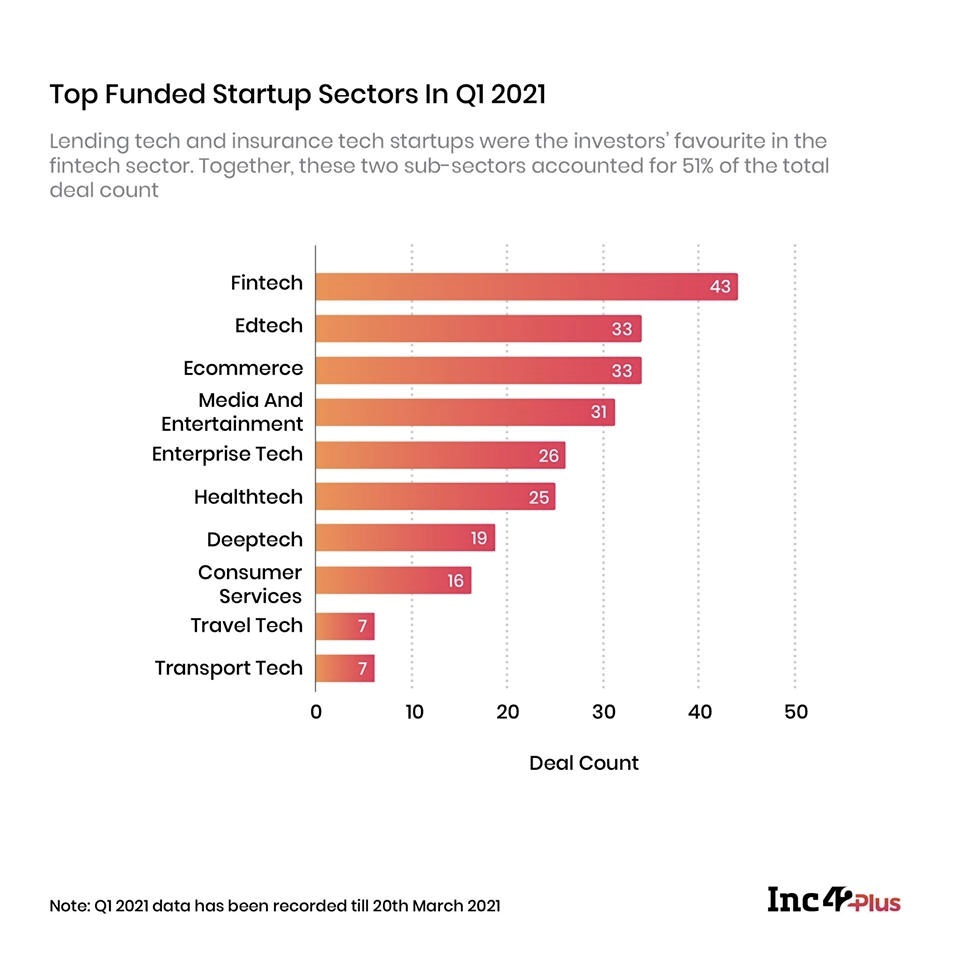
    Image Source: Inc4Plus

    Finally,  as per the figure, you can observe that the top-funded startup sectors in 2021 are mostly related to companies using digital technology as the primary part of their business. Observing this trend we can easily say that this paves a way for all MSME businesses to focus on the implementation of the above points in the correct way. For more guidance connect with us at info@technocratiq.com


    Conclusion

    The possibilities for creating engaging, inspiring marketing campaigns are limitless in the digital age. Take the guidance and devote time to connect on a personal level with your prospects, focus your efforts, and take a strategic approach to your business activities.


    TIQ aims for you to grow your market online. For questions or to get started with digital marketing services, drop us an email at info@technocratiq.com or call +91 798 25 34 881.

  • The Secrets to Marketing in the Gaming Industry in 2021 | TIQ

    The Secrets to Marketing in the Gaming Industry in 2021 | TIQ

    The gaming industry is on the rise and gamers come from every corner of life, irrespective of their age group and location. The gaming sector has been largely considered as a playground for dreamers and is not confined to a certain group of people anymore.

    Today there are many types of games, ranging from online to digital downloads, games for free, augmented reality (AR), artificial intelligence (AI), and mobile games.

    Structured Global Marketing of these games is a challenge that the gaming industry is finding difficult to overcome. The number of users is growing on various platforms every day and the endless choice of games and the constant need to distinguish themselves from other games has become essential.

    The gaming industry is considered to be one of the most exciting industries in tech because of its importance to culture, entertainment, and innovation. PC, console and mobile gaming companies are using the latest in tech to bring their games to the screens of more than two billion people all over the globe. The biggest challenge now is how the gaming industry can maximize brand visibility?

    SEO in Gaming Industry 

    With a new generation of interactive games making their mark on the players, gaming sites and apps have become one of the primary sources of entertainment worldwide. With the expansion of the gaming industry, SEO for gaming sites has seen a surge in demand.

    With so many different genres of games, different system requirements, and many more elements, it is imperative to determine the type of gaming site as the first step. Different niches of gaming require different approaches to SEO.

    Gaming sites majorly consist of gaming-related content like portals, gaming blogs, rulebooks, tips & tricks, and many more things that set the stage for SEO. The online gaming community is very particular about the gaming content they want to access, and this process helps in capturing the right target audience for your gaming site or gaming app.

    The general principles of SEO also apply to gaming sites. This is to improve the quantity and quality of traffic on your website through organic results. Focusing on unique content, knowing what drives your users, and integrating specific keywords are all important strategies.

    Get a Free Analysis – Search Engine Optimization for Higher Ranking & More Traffic

    3  Major Marketing Challenges the Gaming Industry  Faces

    Understanding where the problem lies is one of the best ways forward. In order to create a marketing strategy, you need to understand some of the prevailing challenges. Here are some of the major challenges to take note of –

     1. Convenience over scale and size  

    Game developers go through a lot to deliver just the right amount of design features to match their pricing. People are now opting for games that are cheaper and more convenient. Developers continue to fight the issue of right size titles. This is as much as choosing games that are more convenient to them, rather than putting so much on the size and scale of the game.

     2. Dynamic Player Habits  

    As years go by, clearly there is an increase in the number of casual consumers. They are increasingly fragmenting across platforms and devices and becoming more and more tricky. This makes their needs, interests, and styles a bit tricky to satisfy. Players can squeeze in a few minutes to play games on their phones or, at other times, sit down and enjoy games on their consoles. Reaching out and addressing these habits on multiple devices is an important issue to resolve.

     3. Gamers and fans are more informed  

    Growth of social networks, websites, access to user reviews, and word of mouth. They all played a part in making the demographic game more informed than ever before. It is not easy to measure how much information about a product can travel. If users find that your game is below average, the word will go around in just a few minutes, and that’s it.  If a rival developer decides to go ahead and release a similar but better game, you’re done. It is therefore important that marketing professionals in the gaming industry get their game up. They need to focus more on exciting, engaging, and empowering end-users to capture the dynamics of the population.

    How can modern digital marketing find its way into the gaming industry? 

    The Word called “Mobile” 

    51% of global gaming industry revenue is contributed by mobile gaming. The mobile gaming market is huge and waiting to be tapped in the correct way. A best-in-class marketing company can help you build brand awareness more quickly if you choose to target the mobile gaming market.

    Video Marketing 

    Video Marketing is a boom in the current scenario. The engagement video content attracts everyone and it has the potential to influence consumers more than any other type of content.

    The increasing number of game streaming channels on Twitch, YouTube shows the growing importance of video content in the gaming industry. Newbies, aspiring gamers, and champions have been watching gaming videos for hours, either polishing their skills or just for the sheer thrill of watching them. They tend to watch their favourite gaming influencers and follow them for tips and tricks.

    Power of WORDS 

    Sharing your games on gaming boards like TouchArcade and GameFAQs is a sound way to spread the word. Let the audience have a feel for your game. Ask for the feedback, and use negative feedback to make some improvements to your game.

    Women Power 

    It’s not surprising that 45 percent of gamers are women. Women players are not limited to card games, RPGs, and other theme-oriented games. They don’t tend to stick to certain targetted genres and are open to trying out new games. Companies can leverage this to reach a broad audience.

    Brand Integrity 

    A significant percentage of gamers are known to develop an emotional connection to such brands, and this can significantly influence their decisions about which brand to choose. You could very well be partnering with some of those great influencers to extend the emotional connection to your target audience. New game releases are adopted easily by your early adopters.

    Conclusion  

    Just like marketing in other industries, marketing in the gaming industry involves everyone who is connected to the brand. You can be more inclusive regarding the audience, breaking the stereotypes, and conceive of games and characters that cater to a wider audience. Every game should target to uphold your identity as a brand, and you can win hearts.

    TIQ forms a perfect Custom Marketing Strategy Services designed for the Gaming Industry’s success in 2021. For questions or to get your website or app analysis, drop us an email at info@technocratiq.com or call at +91 798 25 34 881.

  • What is Influencer Marketing

    What is Influencer Marketing

    Do you remember the early days of the internet? It was full of pop-up ads and disruptions that were annoying and, frankly, caused a lot of people to simply abandon web pages in favor of some other site with less advertising. But advertising is important for companies because a lot of people are still browsing websites. But there’s been an evolution in how companies are trying to connect with others on the internet. One result of that is what’s called influencer marketing.

    Influencer marketing is when companies work with those who have a wide audience and a lot of, well, influence. It’s not a traditional ad message, but it is still a way to promote something, helping people know about and believe in a product because they know about and believe in a person. What is influencer marketing and what can you do to help your company advance? This graphic explains it.


    What is Influencer Marketing When Should You Use It

    Via Salesforce

  • 3 Steps to Master Digital Advertising – Inside Google Marketing

    3 Steps to Master Digital Advertising – Inside Google Marketing

    What is Digital Advertising? 

    At its most basic, digital advertising is any sort of advertisement that appears online, whether on your web browser, your social media apps, or other destinations and resources across the internet.

    Today, digital advertising takes many forms and uses various channels including social media, video streaming, mobile apps, Pay-Per-Click (PPC) ads you see at the top of search results, and almost anywhere else that can get your attention. We take a look inside the biggest and the most connected advertising platform.

    Inside Google Marketing 

    We split the plan into three steps, sharing precisely what Google’s Advertising team uses—and in what order—to raise awareness, lead generation, online sales, offline sales, and install applications.

    3 Steps to measure Digital Advertising 

    Step 1  

    Use Data to Set Goals

    Type of Goals

    Thought Roadmap:

    a) What do you want to achieve with a Google ad campaign?

    This is the marketing objective (MO). The performance products of Google ads are specially designed for these four: Lead Generation, Online Sales, Offline Sales, & Mobile Growth.

    b) What metrics do you have to measure and improve to fulfill that MO?

    This is the KPI (Key Performance Indicator).

    c) What Value does the KPI have to reach to be successful?

    That is the campaign goal. This value is determined by the ROI required by the business based on the Customer Lifetime Value (or nearest proxy to this).

    Type of Performance Goals  

    A framework that helps the effectiveness and cost-efficiency of marketing efforts:

    Choosing a Goal

    A useful Campaign goal is :

    a) Quantifiable: Results can be measured clearly

    b) Incremental: Goes beyond what is achieved naturally without any media expense.

    c) Commercially Viable: Produces positive return on investment.

    The gold standard for performance campaigns inside Google advertising is Customer Lifetime Value(CLV), which measures a customer’s value over a specific time-frame.

    Step 2

    Performance campaign metrics  

    When Google works on sales or revenue campaigns (which the team calls ‘results’ or campaigns for ‘direct response,’) we usually target the following.

    Conversion Tracking

    A Conversion occurs when a customer completes a valuable action.

    Conversion tracking is critical because:

    a) it shows whether the campaign is effective in driving the desired KPIs and goals.

    b) it allows us to calculate the campaign ROAS or CPA, to see if the campaign is cost-efficient.

    c) it allows us to save time and improve efficiency by unlocking automated strategies in Google Ads.

    Automation

    Google ads use strong algorithms to learn machines to help get the right ads to the right client.

    We often introduce automated bidding once we’ve set up conversion monitoring.

    – automation optimizes our campaigns towards a metric or objective

    – it’s guided by our CLV and our target ROI (Return on Investment)

    – saves us time, providing both flexible control options and insightful reporting tools

    – ensures efficiency by placing the right bid at the right time.

    Dynamic Creatives

    Dynamic creative formats are another excellent form of automation accessible through conversion monitoring.

    We saw that machine learning manually checks our creative properties. We use dynamic creatives because they produce more income per media dollar invested in our experience.

    – These advertisements are driven by machine learning algorithms to view custom-tailored images and text

    – 45k+ possible permutations are available for testing with up to 30 person text, logo, video & image variations.

    Also Read: 3 ways humans can do PPC better than machines alone

    Step 3

    Waterfall Media Planning

    The Waterfall

    A waterfall methodology provides budgets dependent on their performance for the various channels.

    – The best channel performs in full before the demand within CPA and ROAS goals can be completely captured.

    – At this point, it’s considered fully-saturated; only then does the second-best performing channel begin receiving funds, and so on.

    – Google prioritizes the networks continuously, thereby hitting the objective of the total CPA or ROAS by CLV.

    Water Budget Planning
    Why use WaterFall? 

    Running multiple campaigns & products across Google Ads can be complicated.

    – We found that our best-performing channels are a priority, which means that we continue to concentrate financially on lasers and measuring.

    – The Waterfall strategy encompasses both large and small budgets and national and global initiatives.

    Conclusion 

    Advertisement Strategy is one of the key elements of the marketing mix and deals with anyone or two-way communication that takes place with the consumer. Bookmark this page to following these simple steps to gain maximum advantage.

    If your campaigns are getting complicated and are not driving the results then you can reach out to us for advisory.

    For questions or to share your project details with us, drop us an email at info@technocratiq.com or Whatsapp at +91-7982534881.

    Article submitted by:

    Amit Sharma

    Linkedin: www.linkedin.com/in/amtysharma


  • 6 Key Metrics to measure Internal Brand Health

    6 Key Metrics to measure Internal Brand Health

    What is Internal Branding

    Internal Branding is a corporate strategy measure to empower and motivate employees to not only retain the brand promise but to “live” it. To do this, organizations involve employees in the process of brand development, inform them about the brand, and encourage them to feel inspired about the brand in order to influence their behavior to support the brand. Internal branding is essential because brands grow from the inside out and in fact contribute to increased sales.

    To measure internal branding we can use a framework of 6 A’s of internal brand health.

    1 . Attention

    2 . Awareness

    3 . Acceptance

    4 . Advocacy

    5. Action (most critical)

    6 . Adherence

    Each factor adds up to a measurement system where you can get a heat map of the internal brand health of the organization. So you can assess your organization and can look at the pockets where the brand is delivering and where it’s not delivering. Finally, you can engage in requisite action as a result.   Let’s discuss it in detail:

    Attention

    The first aspect of measuring the internal brand health is to understand if everyone is giving attention to the definition and do all the employees understand the importance of their brand promise? For example, operations have different KPIs in their job and they are not paying attention to the image or promise that the senior level wants to portray. They probably don’t even realize what they’re doing in terms of your brand. So it attention should be given to it.

    Awareness

    Most employees do not understand their company’s strategy and in turn, they don’t understand the company’s brand promise. It is important if you can boil down the brand promise not to six, seven, eight different aspects, but maybe one or two and make everyone aware about it.

    If you do a preliminary internal review, you’ll see that across your organization, people have quite a different sense of what your brand is about.

    Acceptance

    This is really when it gets to the personal level.

    Do I personally believe in this brand’s promise?

    I might understand it, but it doesn’t mean I believe in it, I identify with it, I accept it as being the right thing. I might have other ideas for the brand.

    Segment your population into Antagonists (the ones who don’t care) and brand ambassadors or advocates who will make sure your brand message is spread.

    Advocacy

    Advocacy is all about the personal motivation you derived from the brand.

    Do your employees believe that they are positively affecting someone or some cause? A lot of people do get motivated by making a difference in other people’s’ lives.

    They sense and feel your strategy as part of their work, and that’s where the advocacy comes from.

    Action

    It is one of the most important as a lot of companies fail to implement it even after defining and designing an excellent brand structure.

    Do your employees actually know what to do in order to deliver on the brand promise?

    So imagine the fact that you have employees, they know your brand, they think branding is important, they are motivated by it, but they don’t know what to do. It’s sometimes not obvious how to deliver on the brand promise. So creating an action plan and measuring its strength is essential to measure the brand health. Reach out to us at info@technocratiq.com for a strong action plan.

    Adherence

    Now, the final one is really about adherence, do things stick? Does the environment, the culture of the organization, the rewards, recognition, the systems, the processes, do they actually help live their brand?

    So, imagine the following that if your brand is all about customer care, but then all you get rewarded is for sales. So, it’s all about how these things fit together.

    Yes, you are told to provide customer care but you know what? In a call center, you are rewarded based on the number of calls per hour. So there’s a disconnect between what we want to achieve with the brand, and what we reward people for and build the culture of the organization.

    That’s really the internal aspect of brand health.

    Conclusion

    Internal Brand Health is an early indicator therefore, you need to change things internally before you can see the results externally. It’s a significant aspect of brand health, one we do not see implemented in many organizations.

    TIQ forms a perfect alternative to solve all your queries and provide you a proper Brand Strategy. For questions or to get your company’s internal brand health monitored, drop us an email at info@technocratiq.com or call at +91 798 25 34 881.

  • How can brand perception monitoring affect a change in your business decisions

    How can brand perception monitoring affect a change in your business decisions

    How can brand perception monitoring affect a drastic change in your company’s business outlook?

    MODERN WAY: Measuring brand health is turning the traditional sales funnel upside down, which is from a brand perspective, not looking at the sales, but saying:

     How many customers are aware of our band?

      What do customers want from brands?

     How many consider us?

     How many prefer us?

    Is your customer loyalty based on Price or Preference? Customers might prefer your company, but still, buy something else because of the price.

    How many have an emotional bond with your company? Will they really struggle to buy something else?

    To answer all the above questions, Brand perception needs to be considered from an entirely inverted funnel that puts the Customers at the top and Management driving the Brand at the bottom.

    Monitoring the inverted funnel directly results in translating changes into actual customer behavior in terms of consideration, in terms of purchase, and loyalty.

    One critical aspect of brand perception is to look beyond the sales number and focus on becoming the preferred choice.

    Now for some brands, this can be a real problem because by appealing to some groups of customers, they are actually not appealing to other ones.

    Red Bull has created a perception towards young, excitement seeking individuals, predominantly related to adrenaline or sports. It does not target the perception of others e.g. it will surely not a drink that parents will buy in grocery shopping for their kids like Pepsi and Coca-Cola. Similarly, Disney, the concept of magic also follows the same perception.

    Critically think about the customers with whom you want to own these associations, which ones do you want to sell to, which ones do you not want to sell to. And then think about that pyramid or inverted sales funnel because that’s what’s driving your business at the end of the day.

    Critical aspect

    Who actually delivers on that promise, it’s your people. Either directly through their behavior, or indirectly through the products and services.

    So now you need to ask yourself the questions well what if my people don’t know what my brand stands for. What if they don’t believe in it, what if it doesn’t motivate them. Well, then you’re going to fall short in the delivery of your business strategy.

     Opt our Brand Strategy Services which helps you monitor your Brand understanding and delivery.

    Conclusion

    Hence monitoring and correcting Brand perception can help you achieve your business goals in the long run and provide loyal customers and strong brand advocates as internal branding is equally important.

    TIQ provides you a perfect strategy to solve all your queries. For questions or to share your project details with us, drop us an email at info@technocratiq.com

  • Brand Image vs Brand Identity – Traditional Methods used by Brands

    Brand Image vs Brand Identity – Traditional Methods used by Brands

    A few traditional methods used by brands even today to understand the identity-image gap.

    The brand GAP that we are talking about is the gap between communicated brand identity and perceived brand image by channel members and the consumers. It is the question of Who You Are Vs How You are seen?

    Let’s take a look at how you can measure this gap.

    What is Brand Image?

    Brand image is the perception of customers for a particular brand. The image of any brand tends to develop over time.  It is formed in the minds of customers based upon the experience and interaction with the brand, interactions can be in different ways and not necessarily only the buying or using of the product or service. The major concept behind the brand image is that the consumer isn’t just buying the product or service but also the image which is associated with that product or service.

    What is Brand Identity?

    A brand identity is a collection of tools or elements used by a company to build a brand image. Brand identity and its components arise from a company’s mission, brand value proposition, competitive position on the market, long-term goals, and importance to the values and concerns of the target audience. These components have a foundational nature and, in the branding process, describe what a company wants to communicate with its target audience. Meanwhile, a brand identity defines how these foundational elements are communicated. The most common elements of a brand identity usually include:

    ➤ A brand name

    ➤ A tagline or a slogan

    ➤ A voice and a tone

    ➤ Colors and graphic styles

    ➤ A style and a typeface

    ➤ A logo and a wordmark and their variations.

    Traditional ways to capture the image identity gap

    A lot of companies perform a preliminary image identity gap analysis by capturing the brand associations from these two perspectives (internal + external). Traditional ways to capture them include:

    1. Perception surveys: This FUNNEL Model answers the questions like have we created awareness of our brand? Are people considering it? A subset of those are actually buying us, and a subset of those will buy nothing else. They’re very, very loyal to our brand.

    Alternatively, on the other hand from these we can also answer – What is the strategic health of our brand? How they’re looking at you and your competition because it’s not just about how well you’re doing, but how well you’re doing compared to others.

    2. Customer experiences forms: Brand marketers communicate with their target consumers to make them aware of brand identity and communicate the same way to the channel members directly. Channel members, in turn, convey the same to the end-users. Thus, a proper alignment of these three crucial nodes, namely, brand marketers, channel members and consumers, is inevitable for the efficient transfer of brand identity. However, in reality, not all are successful in synchronizing communicated brand identity and image perception. So, the identification and measurement of the identity-image gap are essential.

    3. Non-Traditional Method: Structuration theory proves to be a solid theory which links the elements of the branding process (culture, identity, image, and influence) to empirical efforts grounded on this theory.

    Structuration theory can acknowledge the interaction of dynamic relationships between these different facets of branding.

    Opt our Brand Strategy Services which helps you create your Brand Identity and build upon the image.

    Conclusion

    Once a gap is identified through traditional or non-traditional, it will be easy for marketers to adopt possible measures to bridge the gap. This helps brand marketers to understand the branding process more objectively. Technology is providing you with a better analysis that will help you improve your operations, strategies, and customer experience.

    TIQ forms a perfect alternative to solve all your queries and provide you the proper Brand Strategy. For questions or to share your project details with us, drop us an email at info@technocratiq.com.

  • B2B Marketing News: LinkedIn’s 2021 Planning Report, Traits of Top B2…

    B2B Marketing News: LinkedIn’s 2021 Planning Report, Traits of Top B2…

    [ad_1]

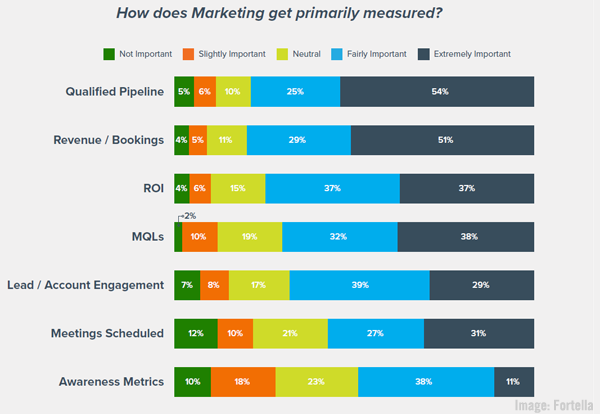
    2021 January 8 Fortella Chart

    2021 January 8 Fortella Chart


    LinkedIn Shares New Usage Insights for Your 2021 Planning [Infographic]
    Microsoft-owned LinkedIn (client) has released updated usage statistics showing that the professional social network’s LinkedIn Live video streams have increased by 89 percent since March, along with strong levels of member engagement — two of numerous statistics of interest to digital marketers. Social Media Today


    Google Question Hub Is Open & It’s A Great Way To Find Content Ideas
    Google has rolled out a new service showing unanswered search question data, offering U.S users access to its Question Hub for the first time — a feature previously only available in three non-U.S. nations. Search Engine Roundtable


    Why B2B marketers need to bet big on ‘The Big Long’
    Brand investment is key for providing business value according to data from the 2030 Marketing Trends report from Linkedin’s The B2B Institute, and Marketing Week explores five of the key benefits that come from building a B2B brand. Marketing Week


    The Top 20 Content Marketing Hashtags, Topics, and Searches
    71 percent of content marketers use a digital marketing hashtag alongside their content marketing tag, while strategy, SEO, and social media are the top three topics discussed with content marketing, according to newly-released study data from SEMrush examining more than 600,000 tweets and Google searches, the firm announced. MarketingProfs


    Most Covered Terms Of 2020: ‘COVID-19,’ ‘Digital,’ ‘Personalization,’ ‘Meaningful’
    COVID-19, “meaningful” and “personalization” led the way when it came to the most covered search terms during 2020 at MediaPost, in its annual look at the most-referenced terms of the year. MediaPost


    Bing Webmaster Tools adds crawl requests, crawl errors & indexed pages to performance report
    Microsoft’s Bing has added new functionality to its Bing Webmaster Tools utilities, with additional metrics that can aid marketers in spotting potential trouble-spots, the firm recently announced. Search Engine Land


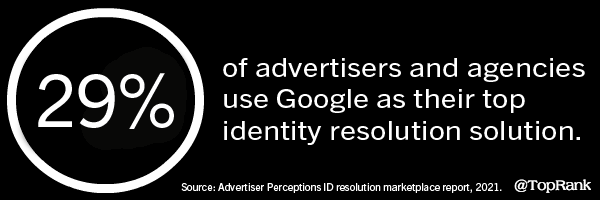
    2021 January 8 Statistics Image


    Emerging New Brand Role: Enabler Of Personal Innovation
    Brands increasingly see success when they create conditions that foster personal innovation, according to recently-released annual trend report data showing a variety of new forms of interaction and brand-shaping. MediaPost


    Amazon acquires podcast network Wondery
    Amazon has acquired the podcasting network Wondery, the firm recently announced, noting that the newly-acquired podcast network will be added to Amazon Music, offering new opportunities for digital marketers seeking to promote podcast content. TechCrunch


    Apple Granted Patent Supporting Further Development Of Search Technology
    Apple has received a patent that will allow it to delve further into search engine functionality, with domain-based influencer scoring among the firm’s search technologies that were granted a patent, Apple recently announced. MediaPost


    Fortella Releases “State of B2B Marketing: 2021” Report, Examines the Traits of Top-Performing Marketing Departments
    64 percent of B2B marketers find budgeting resources to be a top challenge, followed by tracking, quality data, and finding the right talent, according to recently-released survey data exploring top challenge strategies and tactics employed by marketing executives at leading B2B companies. MarTech Series


    ON THE LIGHTER SIDE:


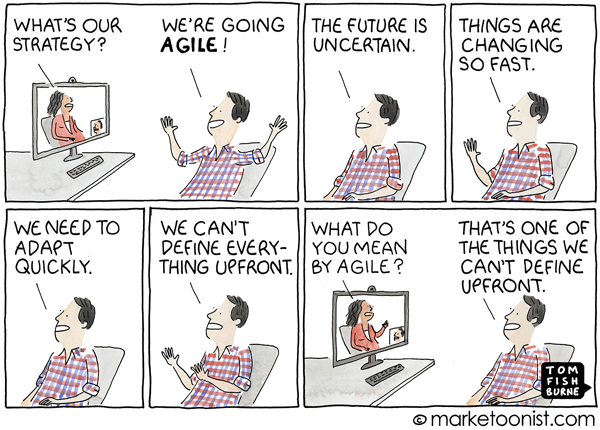
    2021 January 8 Marketoonist Comic

    A lighthearted look at “we’re going agile” by Marketoonist Tom Fishburne — Marketoonist

    Adweek’s Most Popular Online Stories of 2020 — Adweek


    TOPRANK MARKETING & CLIENTS IN THE NEWS:

    • SAP — Global CMO of SAP Discusses Intersectionality in The Business of Marketing — Adweek

    Have you found your own top B2B marketing story from the past week of industry news? Please let us know in the comments below.

    Thanks for joining us for another edition of our B2B marketing news, and we hope that you will return again next Friday for more of the most relevant B2B and digital marketing industry news. In the meantime, you can follow us at @toprank on Twitter for even more timely daily news.

    The post B2B Marketing News: LinkedIn’s 2021 Planning Report, Traits of Top B2B Performers Study, Google’s Question Hub, & Apple’s Search Aspirations appeared first on B2B Marketing Blog – TopRank®.

    [ad_2]


    Source link

    Author
    Published Date

    Contact Us


  • UNLOCKING INSTAGRAM FOR MICRO, SMALL AND MEDIUM BUSINESSES GLOBALLY

    UNLOCKING INSTAGRAM FOR MICRO, SMALL AND MEDIUM BUSINESSES GLOBALLY

    ALMOST ONE THIRD INTERNET USERS USE INSTAGRAM! Instagram with its 700 million active user base has positioned itself as the preferred platform for business across the world. Most viewed Instagram stories are from business accounts and consumers have already spent billions of dollars purchasing Instagram recommended goods and services. 


    Let us dive straight into how it all works?

    1. Creating an Instagram Business account or converting your existing personal account

    Most of you reading this will already have a personal Instagram account. If your content is updated, niche, and creative you can just simply convert your personal account to a business account. Or you can simply just create a new Instagram Business account.  


    2. Development and implementation of successful Instagram Strategy

    When it comes to defining your brand’s unique selling point, you need to first define your geographies and target demographics to set a clear objective for your planned business activities. We at TIQ, are experts in creating a successful Instagram business model for your business so that you can just plug and play your content. Schedule your free consultation


    3. CONTENT, CONTENT, CONTENT

    It goes without saying that to reach your audience and place yourself as a desired brand your content needs to be authentic with a concise call to action system. Creating your content calendar and optimising your existing creatives will make you stand apart from your competitors. 


    4.  Metrics, Maths, and More

    YES! There are various tools both free and paid across the internet which provide you the ability to measure your goals and revisit your expectations for every campaign. Some of the best tools available are BufferHootsuiteSprout, and SkedSocial. Check them out! 


    Now let me share some professional TIPS from our experts at Technocratiq to boost your businesses social media presence

    1. First impression will last forever, your time is now! 

    2. Integrate your social media marketing with a unified message across platforms.

    3. Engage with your audience, provide that value they have been looking for! 

    4. Manage your reputation and build a credible brand with trusted reviews

    5. Start with one platform, then build on it. 

    6. Document your day to day operations for content, it will be easier to document than to create.   

    Let your audience feel they are in control and prioritize quality over quantity. Create a great lasting brand and reach a global audience for your business through Instagram marketing. Contact us to know more about how Instagram is made for your business.