Category: B2B Marketing

  • 5 Ways Marketing Automation Can Boost Fintech Lead Generation

    5 Ways Marketing Automation Can Boost Fintech Lead Generation

    Introduction

    In the fiercely competitive landscape of fintech, generating high-quality leads is crucial for sustained growth and success. Fintech companies are now utilizing marketing automation to revolutionize their lead generation efforts, leading to impressive outcomes. This article delves into five key strategies that leverage marketing automation to propel fintech lead generation to new heights.

    Understanding Fintech Lead Generation

    Fintech lead generation is the process of identifying and nurturing potential clients interested in financial technology solutions. However, this process is not without its challenges. The fintech industry is highly competitive, and consumer behaviors are constantly evolving. Marketing automation plays a pivotal role in overcoming these obstacles by automating repetitive tasks, streamlining workflows, and delivering personalized experiences to leads.

    Automated Lead Nurturing Sequences

    One of the most impactful ways marketing automation boosts fintech lead generation is through automated lead nurturing sequences. These sequences allow fintech companies to deliver personalized messages to leads across multiple channels, including email, social media, and content marketing platforms. Companies can improve their lead generation process by regularly monitoring important performance metrics and using data analysis to make necessary adjustments. This will help ensure that leads are getting the right information at the right time, ultimately boosting the chances of converting them into customers.

    Data-Driven Targeting Strategies

    Data-driven targeting strategies are another essential component of successful fintech lead generation. By leveraging customer behavior analysis and AI-powered algorithms, fintech companies can identify and prioritize high-quality leads with precision. Predictive analytics further enhance this process by forecasting consumer actions and enabling companies to tailor their messaging accordingly. This data-driven approach not only increases engagement and conversion rates but also ensures that fintech companies allocate marketing resources efficiently.

    Social Media Automation for Outreach

    Social media automation is a powerful tool for fintech lead generation. Fintech companies can maintain a consistent online presence and nurture relationships with leads throughout their buyer’s journey by automating posts, scheduling content, and engaging with followers. Personalized outreach strategies and prompt responses to inquiries demonstrate expertise and build trust with potential clients, ultimately increasing the likelihood of conversion.

    Lead Nurturing Workflows

    Effective lead nurturing workflows are essential for converting leads into customers in the fintech industry. Marketing automation enables companies to monitor and analyze the success of their lead nurturing campaigns in real-time. By leveraging sophisticated automation tools, fintech companies can personalize communication, target outreach efforts, and maximize conversions. Continuous evaluation and optimization of lead nurturing workflows ensure that companies stay ahead of the curve and maintain a competitive edge in the market.

    Integration with CRM for Seamless Follow-up

    Seamless follow-up is critical for converting leads into customers in fintech lead generation. Integration with Customer Relationship Management (CRM) systems enables fintech companies to streamline their lead management processes and prioritize leads effectively. AI-powered analytics further enhance this process by identifying high-potential leads and guiding follow-up actions. Real-time data synchronization ensures that leads receive timely and tailored communication, increasing the likelihood of conversion.

    FAQs

    Marketing automation streamlines lead generation processes, allowing fintech companies to attract, nurture, and convert leads efficiently.

    • How does personalized messaging enhance lead nurturing?

    Personalized messaging builds rapport with leads, demonstrating an understanding of their needs and preferences, ultimately increasing the likelihood of conversion.

    • Why is data-driven targeting important in fintech?

    Data-driven targeting enables fintech companies to identify and prioritize high-quality leads, ensuring that marketing efforts are focused on the most promising opportunities.

    • What are the benefits of social media automation for fintech companies?

    Social media automation saves time and resources while maintaining a consistent online presence, fostering engagement with leads, and driving traffic to conversion points.

    • How does CRM integration improve follow-up in lead generation?

    CRM integration streamlines lead management and prioritization, ensuring that follow-up actions are timely and targeted, maximizing conversion opportunities.

    • How can fintech companies optimize their lead nurturing workflows?

    Fintech companies can optimize lead nurturing workflows by continuously monitoring performance metrics, refining strategies based on insights, and implementing personalized communication tactics.

    Conclusion

    Marketing automation is a game-changer in fintech lead generation, offering unparalleled efficiency and effectiveness. By implementing these five strategies, fintech companies can unlock new opportunities, drive growth, and stay ahead in the competitive landscape. Embrace automation and revolutionize your approach to lead generation today.

  • Quick Wins: Fastvertising Tactics That Deliver Instant ROI

    Quick Wins: Fastvertising Tactics That Deliver Instant ROI

    In the dynamic realm of modern business, where change is constant and consumer expectations evolve in the blink of an eye, the need for instant results has become a paramount force driving marketing strategies. This blog dives into the realm of “Fastvertising,” a cutting-edge approach that not only acknowledges the accelerated pace of our digital landscape but harnesses it for unprecedented success.

    The Need for Speed in Advertising: Accelerating Success in a Dynamic Landscape

    In the perpetual motion of the digital era, the landscape of consumer behavior is undergoing a rapid transformation, necessitating a paradigm shift in advertising strategies. This section delves into the imperative need for speed in advertising, propelled by the changing dynamics of consumer behavior and the challenges businesses confront in this swiftly evolving digital terrain.

    Challenges Businesses Face in a Fast-Paced Digital Landscape:

    In the race against time, businesses encounter a multitude of challenges in the digital arena. Traditional advertising models, which often involve prolonged planning and execution phases, struggle to keep up with the speed at which trends emerge and fade. The challenges include:

    • Rapid Technological Changes: Technologies evolve swiftly, and businesses must grapple with staying abreast of these changes to remain technologically relevant in their advertising efforts.
    • Fierce Competition for Attention: The digital space is saturated with content from myriad sources. Breaking through the noise to capture the attention of a target audience demands innovative and swift strategies.
    • Shortened Consumer Attention Spans: The average attention span has dwindled, and businesses must convey their message effectively within a narrow window of opportunity to engage their audience.
    • Instantaneous Consumer Feedback: Social media platforms have given consumers a powerful voice. Immediate feedback, both positive and negative, can shape perceptions and influence the success of advertising efforts.
    • Introducing Fastvertising as the Solution: In response to these challenges, Fastvertising emerges as a strategic solution tailored for the exigencies of the modern business landscape. Fastvertising is not merely about speed; it’s a comprehensive approach that recognizes the need for immediacy in every facet of advertising.
    • Agile Campaign Execution: Fastvertising embraces agility, allowing businesses to pivot quickly in response to emerging trends or shifts in consumer sentiment. Campaigns are designed to be adaptable, ensuring relevance in the face of change.
    • Real-time Data Utilization: Leveraging real-time data insights, Fastvertising empowers businesses to make informed decisions on-the-fly. This data-driven approach ensures that campaigns are not only swift but also strategically optimized for immediate impact.
    • Timely and Relevant Content: Fastvertising prioritizes the creation of content that is not only visually compelling but also relevant in the moment. This ensures that the message resonates with the audience’s current interests and needs.
    • Multi-Platform Synchronization: Recognizing the diverse touchpoints of the modern consumer, Fastvertising ensures a synchronized presence across various platforms. This multi-platform integration maximizes visibility and engagement.

    Decoding Fastvertising: What Sets It Apart?

    Fastvertising, a fusion of “fast” and “advertising,” is a strategic approach that prioritizes speed, responsiveness, and adaptability in marketing efforts. At its core, it’s about crafting and executing campaigns with the agility needed to keep pace with the rapid changes in consumer behavior, technology, and market trends.

    Key Characteristics of Fastvertising:

    1. Agility: Fastvertising thrives on agility, allowing businesses to respond swiftly to emerging opportunities or challenges. Campaigns are designed to be flexible, ensuring that adjustments can be made in real-time based on evolving data and market dynamics.
    2. Immediacy: Immediacy is the heartbeat of Fastvertising. It’s not just about delivering a message quickly; it’s about prompting immediate responses from the audience. Fastvertising campaigns are structured to elicit rapid engagement, whether in the form of a purchase, sign-up, or interaction.
    3. Adaptability: The ability to adapt to changing consumer preferences and market dynamics is a hallmark of Fastvertising. Campaigns are not static; they evolve continuously based on real-time insights, ensuring that the message remains relevant and impactful.
    4. Data-Driven Insights: Fastvertising leverages data analytics to inform decision-making. Real-time insights guide the optimization of campaigns for immediate impact. The use of data ensures that strategies are not only swift but also strategically aligned with the audience’s behaviours and expectations.
    5. Multi-Platform Integration: Recognizing the diverse ways modern consumers interact with content, Fastvertising ensures a seamless presence across multiple platforms. Integration across social media, search engines, and other channels creates a cohesive brand experience, maximizing reach and engagement.

    How Fastvertising Differs from Traditional Advertising Methods

    Fastvertising represents a departure from traditional advertising approaches, marked by its dynamic nature and response to the accelerated pace of the digital era.

    1. Time Sensitivity: Traditional advertising often follows a more extended planning and execution timeline. Fastvertising, on the other hand, operates in real-time, capitalizing on immediate opportunities and swiftly adjusting to changes.
    2. Flexibility and Iteration: Fastvertising campaigns are designed with inherent flexibility. They can be adjusted on-the-fly based on real-time data, feedback, or shifts in market dynamics. Traditional advertising may lack this adaptability.
    3. Consumer-Centric Focus: Fastvertising places a premium on meeting the immediate needs and expectations of the consumer. Traditional advertising models might prioritize longer-term brand building over immediate consumer satisfaction.
    4. Rapid Response to Trends: Fastvertising is primed to capitalize on emerging trends swiftly. Traditional advertising, due to its longer planning cycles, may struggle to keep pace with the rapid emergence and fade of trends.

    Actionable Fastvertising Strategies for Quick Wins: Accelerating Success in Real-Time

    In the fast-paced world of digital marketing, achieving immediate returns on investment (ROI) is not just a goal but a necessity. Fastvertising, a strategic approach emphasizing speed, agility, and real-time responsiveness, is the key to unlocking swift success. Here are some tactics within the realm of Fastvertising that can deliver instant ROI for your business:

    1.Flash Sales and Limited-Time Offers:

    Tactic: Create a sense of urgency with time-sensitive promotions.

    How it Works: Limited-time discounts or exclusive offers prompt quick consumer action, driving immediate sales and engagement.

    2.Influencer Partnerships:

    Tactic: Collaborate with influencers for rapid reach and engagement.

    How it Works: Leveraging the trust and reach of influencers can result in immediate brand visibility and increased conversions.

    3.Social Media Blitz Campaigns:

    Tactic: Execute concentrated bursts of engaging content across platforms.

    How it Works: Saturating social media channels with high-impact content maximizes visibility, leading to rapid audience engagement.

    4.PPC Campaign Optimization:

    Tactic: Optimize pay-per-click campaigns for immediate results.

    How it Works: Strategic bidding, targeted ads, and real-time adjustments ensure your brand is prominently featured, leading to swift conversions.

    5.Real-Time Data-Driven Insights:

    Tactic: Leverage analytics tools for real-time campaign adjustments.

    How it Works: Data-driven decisions based on real-time insights enhance campaign effectiveness, ensuring immediate impact.

    6.Dynamic Email Marketing:

    Tactic: Craft personalized and dynamic email campaigns.

    How it Works: Tailored emails based on user behavior and preferences result in higher open rates and immediate conversions.

    7.Interactive Content:

    Tactic: Implement quizzes, polls, and interactive elements.

    How it Works: Interactive content captures attention swiftly, encouraging immediate engagement and sharing.

    8.Social Proof Utilization:

    Tactic: Showcase customer testimonials and reviews.

    How it Works: Building trust through social proof leads to quicker purchase decisions and increased immediate conversions.

    9.Limited-Quantity Offers:

    Tactic: Emphasize scarcity with limited-quantity promotions.

    How it Works: Creating a sense of exclusivity and scarcity prompts quick action from consumers eager to secure the limited offer.

    10.Mobile Optimization:

    Tactic: Ensure fast-loading and mobile-friendly experiences.

    How it Works: With the majority of users on mobile, optimizing for quick and seamless experiences boosts immediate engagement and conversions.

    Incorporating these Fastvertising tactics into your marketing strategy can propel your brand towards swift success, ensuring immediate returns on investment. By leveraging speed, agility, and real-time responsiveness, businesses can thrive in the fast-paced digital landscape and make every marketing effort count toward immediate and impactful results.

    Examples of successful implementation of Fastvertising tactics by the mentioned companies and the impact on their Return on Investment (ROI):

    Fastvertising Tactic

                Companies implemented tactic

    Impact on ROI

    Flash Sales and Limited-Time Offers

    Amazon Prime Day, creating a frenzy of time-limited deals

    Significant surge in sales during the event

    Influencer Partnerships

    Nike collaborating with athletes for product launches

    Rapid increase in brand visibility and engagement

    Social Media Blitz Campaigns

    Coca-Cola’s #ShareACoke campaign across social platforms

    Sustained buzz and increased social media mentions

    PPC Campaign Optimization

    Google optimizing ads for trending search queries

    Immediate visibility and increased click-throughs

    Real-Time Data-Driven Insights

    Netflix adjusting content recommendations based on user data

    Improved user engagement and retention

    Dynamic Email Marketing

    Spotify’s personalized playlists based on user preferences

    Higher open rates and increased premium subscriptions

    Interactive Content

    BuzzFeed’s quizzes and polls engaging users on social media

    Immediate interaction and content sharing

    Social Proof Utilization

    Amazon prominently featuring customer reviews on product pages

    Increased trust and accelerated purchase decisions

    Limited-Quantity Offers

    Apple’s limited edition product releases

    Swift sell-outs and heightened brand exclusivity

    Mobile Optimization

    Starbucks optimizing its mobile app for quick and seamless transactions

    Increased mobile orders and enhanced user experience

    Embracing Fastvertising: A Game-Changer for Businesses:

    In a business landscape characterized by rapid changes and a demand for instant gratification, embracing Fastvertising becomes a game-changer. It’s not merely a marketing strategy; it’s a transformative approach that aligns with the pulse of the digital age.

    • Immediate ROI: Fastvertising positions businesses to achieve instant Return on Investment. Whether through flash sales driving immediate sales boosts or social media blitz campaigns creating a surge in brand awareness, the swift nature of Fastvertising ensures that the impact is immediate and tangible.
    • Competitive Edge: In a crowded marketplace, the ability to respond swiftly to market shifts and consumer needs provides a competitive edge. Fastvertising positions your brand as not just responsive but as a trailblazer in the fast-paced digital arena.
    • Adapting to Modern Consumer Expectations: Modern consumers, with their shortened attention spans and a desire for instant value, resonate with Fastvertising. By aligning with their expectations, businesses create meaningful connections that go beyond momentary transactions.

    Take the Leap into the World of Fastvertising with TIQ Digital:

    We invite you to embark on a journey into the world of Fastvertising with TIQ Digital as your trusted guide. Explore the endless possibilities that agility and real-time responsiveness can bring to your brand. Seize the opportunities that emerge in the blink of an eye, and lead the race for consumer attention with confidence.

    Personalized Consultation: For a personalized consultation on how Fastvertising can revolutionize your brand’s marketing strategy, reach out to Mr. Amit Sharma at amit@technocratiq.com. Our team is ready to collaborate with you, helping chart a course toward marketing excellence tailored to your unique goals and challenges.

    Chat with Us Now! Have questions or want to dive deeper into the world of Fastvertising? Click the chat button now to connect with our team. We’re here to provide insights, guidance, and support.

    Spread the Word! Finally, if you found this blog post insightful and believe others in your network could benefit from the wisdom of Fastvertising, we encourage you to share it.

  • Fastvertising Success Stories: Brands that Nailed It!

    Fastvertising Success Stories: Brands that Nailed It!

    Staying ahead of the curve is essential in the dynamic world of marketing. The trending phrase “ fastvertising” which is a combination of two words “ fast” and “advertising” inculcates the spirit of swift and successful marketing campaigns. In this blog, we aim to highlight few of the world’s biggest brands that have adopted fastvertising and have left an everlasting impression on its target audiences world wide.

    The Power of Fastvertising

    This modern marketing technique is all about planning and delivering the right messages to the target audiences at the right time. Marketing departments in big brands have honed their skills over time to adapt quickly and capture the most out of the momentum created by events happening around the world. It can be an inclusion of new technology, a wave of emotions or changes in the economic environment. Below we are mentioning some of the worlds most recognisable brands and their success stories related to fastvertising.

    1. Oreo: Real time Marketing Genius Campaigns

    Back in 2013, when the stadium lights went out during the biggest sporting event in the world, the super bowl, marketing leaders in Oreo seized this moment by quickly tweeting out with an Image of an Oreo with the caption “ You can still dunk in the dark”. It was indeed a clever way to go viral, creating a massive buzz for the brand.

    Key Takeaway: Stay vigilant during the global events, and be prepared to respond swiftly with unexpected opportunities.

    1. Taco Bell: Harnessing the Power of Snapchat Innovations

    Snapchat, a video sharing platform, was first used by brands to share entertaining content with its user base. Taco Bell was one of the first fast food brand to launch a new product, the Doritos Locos Taco on the social media platform, sharing exclusive content and behind-the-scenes access, creating a strong bond with the customers.

    Key Takeaway: It is essential to explore new platforms, analyse shifts in consumer behaviour and provide unique, engaging content.

    1. Red Bull: Taking Content Creation to Extreme Levels

    Red bull, an energy drink brand synonymous with extreme sports and adventure not only sponsors famed events, but also create astonishing content to promote their brand. Counting down from Felix Baumgartner’s famous space jump to numerous sporting events, red bull’s strategy worked wonders which immerses itself in the world that is the most frequent buyers of their products.

    Key Takeaways: Showcase your expertise in your field to become the most preferred brand.

    1. Dove: Products that connect with you emotionally

    One of the world’s leading brand in FMCG, Dove’s “Real Beauty” campaign aimed at challenging stereotypes and promoting a healthy body image for women of all ages. This brilliant campaign struck a chord with most women, spreading and promoting a positive, empowering message.
    Key Takeaway: In the world of data-driven marketing, do not forget to build that emotional connection with your audience that they crave for in a trusted brand.

    1. Nike: Empowerment through Storytelling

    One of the biggest brand in sportswear, Nike has focused on “Just Do It” slogan which now resonates with almost all of its target audience. Their digital advertisements often feature powerful, stories of underprivileged athletes overcoming dreaded challenges. By inspiring their communities, they focus on building empowerment and a sense of belonging in the community.
    Key Takeaway: Storytelling is one of the most powerful tool to spread and promote your marketing message.

    .

    Learning from the Fastvertising Pioneers

    As marketing evolves above and beyond the 4P’s, let’s draw some key lessons that can help you in applying Fastvertising to your next marketing campaigns.

    1. Be Agile

    The first and most crucial lesson is to be agile. Keep your marketing team ready to act swiftly when opportunities arise. Monitor events and trends closely, and be prepared to jump in when the moment is right.

    2. Embrace New Platforms

    Don’t limit your brand to traditional platforms. Explore new and emerging ones, and understand how they can work to your advantage. Whether it’s social media, video-sharing platforms, or innovative apps, adapt and conquer.

    3. Become an Expert

    Know your field inside and out. If you’re promoting sports, be a part of the sports community. This expertise will give your brand authenticity and authority, making it easier to connect with your audience.

    4. Forge Emotional Connections

    Connect with your audience on an emotional level. Address their concerns and aspirations. Tell stories that resonate with them. A brand that touches hearts is more likely to win loyal customers.

    5. Tell a Compelling Story

    Your brand should have a story to tell. Whether it’s a tale of overcoming adversity, empowering others, or simply inspiring positive change, a compelling narrative can make your brand more relatable and memorable.

    Fastvertising isn’t just a buzzword; it’s a dynamic marketing approach that’s proven to be highly effective. By studying the successes of brands like Oreo, Taco Bell, Red Bull, Dove, and Nike, we’ve learned that agility, platform diversity, expertise, emotional connection, and storytelling are the keys to nailing Fastvertising.

    So, as you gear up for your next marketing campaign, remember the lessons from these Fastvertising pioneers. Be quick, be innovative, and be authentic. In a fast-paced digital world, these qualities will set your brand apart and lead you to success. Fastvertising is not just about speed; it’s about strategy, and these brands have shown us the way.
    TIQ Digital is a performance marketing agency helping brands to take full advantage of Fastvertising. Reach out to us for your next viral marketing campaign.

    FAQs – Fastvertising

    1. What is Fastvertising?

    Fastvertising is a marketing approach that emphasizes delivering quick, effective messages to the right audience at the right time.

    2. How did Oreo excel in Fastvertising?

    Oreo’s real-time marketing during the 2013 Super Bowl power outage showcased their agility in responding swiftly to unexpected opportunities.

    3. Why is emotional connection important in marketing, as shown by Dove?

    Dove’s “Real Beauty” campaign demonstrated that an emotional connection with the audience can promote a positive and empowering message.

    4. What can brands learn from Taco Bell’s use of Snapchat?

    Taco Bell’s use of Snapchat illustrated the significance of exploring emerging platforms and providing unique, engaging content.

    5. How does storytelling play a role in Fastvertising, as seen with Nike?

    Nike’s use of powerful stories in their advertising creates a sense of community and empowerment, making storytelling a key tool in Fastvertising.

    TIQ Digital: Your Fastvertising Ally

    At TIQ Digital, we understand that staying ahead in the ever-evolving marketing landscape requires agility, creativity, and real-time responsiveness. We are your partners in the pursuit of Fastvertising excellence, and we have the tools, expertise, and passion to help your brand thrive in the digital age.

    Why Choose TIQ Digital for Fastvertising?

    • Expertise: With years of experience in the industry, we’ve honed our Fastvertising skills to perfection.

    • Cutting-Edge Tools: We leverage the latest technologies and tools to ensure your brand remains agile and responsive.

    • Strategic Insight: Our team is armed with strategic insight, enabling us to craft personalized, real-time campaigns that engage and convert.

    We encourage you to take the leap into the world of Fastvertising with TIQ Digital as your trusted guide. Explore the endless possibilities, seize the real-time opportunities, and lead the race for consumer attention.

    For a personalized consultation on how Fastvertising can revolutionize your brand’s marketing strategy, don’t hesitate to contact Mr. Amit Sharma at amit@technocratiq.com. Our team are ready to help you chart a course toward marketing excellence.

    Chat with Us now!!

    Call Us Now..

    Spread the Word!

    Lastly, if you found this blog post insightful, please share it with your network. Click on the social media sharing buttons below and let others in your industry benefit from the wisdom of Fastvertising.

  • Email marketing for product launches and small businesses becomes more influential 

    Email marketing for product launches and small businesses becomes more influential 

    In today’s digital age, email marketing has become an increasingly important tool for businesses of all sizes, particularly for small businesses and product launches. With email marketing, businesses can reach out to their target audience and promote their products or services in a cost-effective and personalized manner. In fact, email marketing has been found to be more effective than other marketing channels in terms of generating leads, building brand awareness, and driving sales. In this blog, we will explore the power of email marketing for small businesses and product launches and discuss the strategies that can help them build and grow their email list, create successful email campaigns, and leverage personalization and automation to boost engagement and conversions. We will also cover the metrics and analytics that businesses should track to measure the performance of their email marketing campaigns and make data-driven decisions. So, whether you are a small business owner or a marketer, read on to discover how email marketing can help you achieve your marketing goals and take your business to the next level.


    The Power of Email Marketing 

    Email marketing is a powerful tool that can help businesses of all sizes to connect with their target audience, build relationships, and drive sales. Here are some advantages of email marketing:

    1. Cost-effective: Unlike other marketing channels, email marketing is relatively inexpensive, making it an ideal choice for small businesses with limited marketing budgets.

    2. High ROI: According to research, email marketing has an average ROI of 42:1, which means that for every $1 spent on email marketing, businesses can expect to earn $42 in return.

    3. Personalized: With email marketing, businesses can segment their audience and send targeted messages based on their interests, behavior, and preferences, which can increase engagement and conversions.

    4. Measurable: Email marketing allows businesses to track metrics such as open rates, click-through rates, and conversions, which can help them to measure the effectiveness of their campaigns and make data-driven decisions.

    5. Versatile: Email marketing can be used for a variety of purposes, including promoting products or services, announcing special offers, sharing blog posts or articles, and building brand awareness.


    According to recent statistics, email marketing continues to be a highly effective marketing channel. For example: 81% of small businesses rely on email marketing as their primary customer acquisition channel. 59% of marketers say that email marketing is their biggest source of ROI. Email marketing has a conversion rate of 6.05%, which is higher than social media (1.81%) and search engine optimization (1.22%).


    In comparison to other marketing channels, email marketing has proven to be highly effective in generating leads, building brand awareness, and driving sales. With these advantages, it’s no wonder that email marketing has become an indispensable tool for businesses, especially for small businesses and product launches.


    Building an email list is essential for successful email marketing campaigns. Here are some techniques for building an email list:

    • Offer lead magnets: A lead magnet is an incentive that businesses offer to their target audience in exchange for their email address. Common examples of lead magnets include free e-books, webinars or exclusive content.

    • Opt-in forms: Opt-in forms are forms that businesses embed on their website, landing pages, or social media profiles, inviting visitors to sign up for their email list. To encourage sign-ups, businesses can offer a lead magnet or highlight the benefits of joining their email list.

    • Events and networking: Businesses can also collect email addresses by attending events, such as trade shows or conferences, and networking with potential customers or partners. They can then follow up with personalized emails to nurture those relationships.

    • Referral programs: Referral programs incentivize existing customers to refer their friends or family members to the business, which can help to grow the email list organically.


    When building an email list, it’s important to follow best practices to ensure that the email addresses collected are valid and that the subscribers have given explicit consent to receive marketing emails. Here are some best practices for collecting email addresses:

    • Use double opt-in: Double opt-in requires subscribers to confirm their email address by clicking a confirmation link in an email. This helps to prevent fake or invalid email addresses from being added to the list.

    • Provide a clear privacy policy: A clear privacy policy can help to build trust with subscribers and assure them that their personal information will not be shared with third parties.

    • Avoid buying email lists: Buying email lists is not recommended, as it can lead to low engagement rates, high spam complaints, and damage to the business’s reputation.


    By following these techniques and best practices, businesses can build a high-quality email list that is more likely to engage with their email campaigns and convert into customers.


    Creating Successful Email Campaigns 

    Once businesses have built an email list, the next step is to create successful email campaigns. Here are some tips for creating effective email campaigns:

    • Set clear goals: Before creating an email campaign, businesses should define their goals, whether it’s promoting a product launch, driving website traffic, or building brand awareness. Clear goals will help businesses to create a focused and targeted email campaign.

    • Use a compelling subject line: The subject line is the first thing that subscribers will see, so it’s important to make it compelling and relevant to the content of the email. A good subject line can increase the open rate and encourage subscribers to read the email.

    • Create engaging content: The content of the email should be informative, valuable, and relevant to the subscribers’ interests. Businesses can use different types of content, such as images, videos, or GIFs, to make the email more engaging and visually appealing.

    • Personalize the email: Personalization can increase engagement and conversions by making the email more relevant and tailored to the subscribers’ interests. Businesses can personalize the email by using the subscriber’s name, location, or previous purchase history.

    • Include a clear call-to-action: A call-to-action (CTA) is a button or link that encourages subscribers to take a specific action, such as making a purchase, signing up for a webinar, or downloading a whitepaper. The CTA should be clear, prominent, and relevant to the content of the email.

    • Optimize for mobile: More than half of all emails are opened on mobile devices, so it’s important to ensure that the email is optimized for mobile viewing. Businesses can use responsive design, concise content, and clear CTAs to optimize their email for mobile.

    • Test and analyze: Testing and analyzing the performance of the email campaign can help businesses to optimize and improve future campaigns. Businesses can test different subject lines, content, or CTAs, and track metrics such as open rates, click-through rates, and conversions to measure the effectiveness of the campaign.


    By following these tips, businesses can create successful email campaigns that engage and convert their subscribers. However, it’s important to remember that email marketing is an ongoing process, and businesses should continuously analyze and optimize their campaigns to achieve their marketing goals.


    Examples of Successful Email Marketing Campaigns for Product Launches and Small Businesses 

    Here are some examples of successful email marketing campaigns that small businesses have used for product launches:

    • The Pre-Launch Teaser: This campaign creates excitement around a new product launch by teasing the features and benefits in a series of emails. The teasers can include sneak peeks, behind-the-scenes looks, or early bird offers to encourage subscribers to be the first to purchase the product.

    • The Countdown Campaign: This campaign builds anticipation by sending a series of countdown emails leading up to the product launch. Each email can include a different feature or benefit of the product, along with a call-to-action to sign up for early access or pre-orders.

    • The Limited-Time Offer: This campaign offers a limited-time discount or exclusive offer to subscribers who purchase the product within a certain time frame. The urgency of the offer can encourage subscribers to take action and make a purchase.

    • The Referral Program: This campaign incentivizes existing customers to refer their friends or family members to the new product launch, with rewards such as discounts, free gifts, or early access. This can help to increase the reach of the product launch and generate buzz around the product.


    Here are some examples of successful email marketing campaigns for small businesses in general:

    • The Welcome Series: This campaign welcomes new subscribers to the email list and introduces them to the business, its products or services, and its values. The series can include a series of emails over a period of days or weeks, with each email providing valuable content and building a relationship with the subscriber.

    • The Re-engagement Campaign: This campaign targets subscribers who haven’t engaged with the email list for a certain period of time, with the goal of re-engaging them and encouraging them to become active again. The campaign can include a special offer, a survey to gather feedback, or a reminder of the benefits of staying subscribed.

    • The Seasonal Campaign: This campaign targets subscribers during a specific season or holiday, with offers or promotions that are relevant to that time of year. This can include seasonal products, gift guides, or special events.

    • The Customer Loyalty Program: This campaign rewards existing customers for their loyalty, with exclusive offers, discounts, or early access to new products. This can help to build a strong relationship with customers and encourage repeat business.

    • By studying and implementing successful email marketing campaigns, small businesses can improve their own email marketing strategies and achieve their marketing goals.


    Conclusion 

    Email marketing has become an increasingly influential tool for product launches and small businesses. It offers a cost-effective and efficient way to reach a targeted audience, build relationships, and drive conversions.


    To make the most of email marketing, small businesses should focus on building a high-quality email list, creating engaging and relevant content, and optimizing their campaigns for mobile devices. They can also draw inspiration from successful email marketing campaigns, such as the pre-launch teaser, countdown campaign, limited-time offer, referral program, welcome series, re-engagement campaign, seasonal campaign, and customer loyalty program.


    By continually refining their email marketing strategies, small businesses can increase engagement, conversions, and brand awareness, and ultimately achieve their marketing goals.


  • LinkedIn As A B2B Powerhouse

    LinkedIn As A B2B Powerhouse

    Introduction

    LinkedIn is one of the most well-known professional networking platforms globally. It is not just a platform to connect with people, but it has transformed into a B2B powerhouse that offers numerous opportunities for businesses of all sizes to connect.

    LinkedIn was launched in 2002 and acquired by Microsoft in 2016. Since then, it has evolved into a platform that provides businesses with a host of features, including the ability to create a company page, publish content, advertise to specific audiences, and search for talent. This has made LinkedIn an essential tool for businesses looking to build their brand, generate leads and make new connections.

    Grow your Brand or Business Visibility on LinkedIn

    One of the most significant advantages of LinkedIn as a B2B platform is its large user base. With over 722 million users globally, LinkedIn has one of the largest professional networks in the world. This provides businesses with a vast pool of potential customers, partners and employees to connect with.

    LinkedIn’s targeting capabilities are second to none, making it an attractive option for businesses looking to reach their ideal target audience. The platform allows businesses to target specific audiences based on demographics such as location, job title, industry, and more. This helps businesses to reach the right people with their message and to generate higher quality leads.

    Another advantage of LinkedIn is the ability to publish content. Businesses can publish blog posts, articles and videos, which not only helps to build their brand, but it also provides valuable information to their target audience. Content marketing on LinkedIn can help businesses establish themselves as thought leaders in their industry and increase their visibility to potential customers.

    In addition to content marketing, LinkedIn also offers advertising options that allow businesses to reach a larger audience with their message. With LinkedIn’s advertising options, businesses can reach their target audience through sponsored content, sponsored InMail and display ads. This provides businesses with multiple options to reach their target audience and drive results.

    LinkedIn is also a powerful tool for talent acquisition. The platform provides businesses with the ability to search for and connect with potential employees, post job listings and even sponsor their posts to reach a wider audience. This makes it an ideal platform for businesses looking to hire top talent and to build a strong employer brand.

    One of the most significant benefits of LinkedIn for businesses is its ability to create a company page. A company page provides businesses with a platform to showcase their products, services and company culture. This can help businesses build their brand and generate leads by reaching out to potential customers who are interested in their products and services.

    Finally, LinkedIn provides businesses with the ability to join groups and participate in discussions. This provides businesses with the opportunity to engage with potential customers and partners, build relationships and share their expertise. It also provides businesses with a platform to listen to their target audience and understand their needs, which can help them to better serve their customers and grow their business.

    Conclusion

    In conclusion, LinkedIn has transformed into a B2B powerhouse that offers numerous opportunities for businesses to connect, engage and grow their businesses. With its large user base, targeting capabilities, content marketing options, advertising options, talent acquisition tools and company pages, LinkedIn provides businesses with a platform to reach their ideal target audience, generate leads and build their brand. Businesses that are not leveraging LinkedIn as part of their marketing and sales strategy are missing out on a significant opportunity to grow their business.

    Recommendations for B2B Businesses on LinkedIn:

    1. Create a Company Page: This is a great way to showcase your business and build your brand on LinkedIn.
    1. Share Relevant Content: Share content that is relevant to your target audience and industry to build relationships and increase your visibility.
    1. Engage with Your Target Audience: Engage with your target audience by responding to comments and messages and participating in LinkedIn Groups.
    1. Leverage LinkedIn Advertising: Consider using LinkedIn Advertising to reach your target audience and increase your visibility.
    1. Empower Your Employees: Encourage your employees to become brand ambassadors by sharing your content and engaging with the LinkedIn community.
  • What is Search Intent in SEO?

    What is Search Intent in SEO?

    Google used to rely primarily on plain text and backlinks to determine ranks in its early days. Google search has evolved into a robust product with a variety of algorithm changes aimed at promoting content and results that are relevant to a user’s needs.  That is the reason understanding search intent in SEO has become super important for SEO professionals.

    SEO is a measurable entity.  It is measured on ranking, traffic gained by a website, search volume for a particular keyword, and sales or conversions that take place on the website.  A business owner will want to rank higher on Google and see an increase in their organic traffic that will generate sales and provide them with leads.  These can be achieved by keeping track of the metrics mentioned above.

    However, the most important thing that comes before all these measurable entities is the selection of the right keywords. To choose the right keywords, SEO professionals generally tend to look at search volume and ignore to understand the search intent of a keyword. The content should satisfy the user intent as well as be relevant to the search query for it to rank.

    Search users can be divided into two categories:

    • Specific – Specific users are those who are precise about their search and do not deviate.
    • Exhaustive – Exhaustive search users are those who research a lot and get into the depth of the topic.

    Search engines are continuously trying to improve their understanding of search intent.

    Search engines like Google divide the relevancy of keywords into three categories:

    • Fully relevant – Those keywords that match exactly with the search query.
    • Partially relevant – Those keywords whose search intention is not clear but match with part of the search query.
    • Keywords with multiple meanings – These are the queries that do not tell search engines what the user is actually looking for.  For example, queries like “apple”, it can be related to a fruit or mobile device.

    To answer such keywords with more than one meaning, search engines follow the query interpretation method.

    What is query interpretation?

    When a user enters a keyword that does not convey the correct intent of the search or confuses the search engine, search engines try to interpret the meaning of the keyword to provide the best possible results to the search query.  Query interpretation is of 3 types.

    • Dominant type of interpretation – This is the interpretation which the majority of the users mean when they put in a query, something similar to exact match type.
    • Common type of interpretation – This interpretation is when the search engine is not clear about the query.  Search engines try to provide results based on common interpretations that they can make and provide varying results, similar to our previous example of “Apple.”
    • Minor type interpretation – Queries that have less frequent meanings, which are generally location-specific can be termed as minor interpretations.

    Now that we know about search user categories, keyword relevancy categories, and query interpretations; it is time to understand the search intent.  Search intent is divided into transactional, informational, and navigation queries.

    Transactional Queries

    When a user types in a “do” query, they want to take a specific action, such as buying a product or reserving a service. These are crucial for e-commerce websites, as a consumer may be searching for a specific brand or item.  The purchases or bookings are made online, hence the transactional element is present in such queries.  These are called transactional queries.

    Informational Queries

    These queries are in which the user wants to learn more about a specific topic. Words such as “know” or “know more about” are used in such queries.  Nowadays, these queries relate a lot to micro-moments.  This is because of the use of smartphones with internet connections.  Whenever a user wants some instant information immediately and a search is done with this intent, it is called micro-moment queries.  For example, checking gold or stock rates.  Informational queries can range from simple to complex questions. Product research which is done before the transactional query also falls under the category of the informational query.  Informational queries are given special attention by google because they provide value to customers, whereas transactional queries help businesses.  So to grow your business, it is important to give customers information about your products or services using these informational intent keywords.

    Navigational Queries

    Navigational queries are brand-oriented where a user wants to visit a specific website to know more about the brand or business.

    Other factors which SEO professionals need to keep in mind along with these search intentions are:

    • Featured snippets can help boost SEO.  Appearing in featured snippet does not mean your website will drive a lot of traffic, but it increases the click through rate and introduces you to new users.
    • Understand the buyer journey. It is important to know how a person searches and where they are on their buyer journey.
    • Search intent is not constant, it keeps changing.  As search intent changes, search results also change.  Based on user searches, transactional queries can change into informational and vice versa.  This depends on the situation and the surrounding environment.
    • Machine learning is improving over time, and when combined with other algorithm changes, it has the potential to alter search results pages.

    In conclusion, understanding searcher intent is one of the most important aspects of SEO. By understanding what users are looking for, you can better optimize your content and website to meet their needs. Additionally, incorporating user intent into your SEO strategy can help you to improve your rankings and drive more traffic to your website.

  • Brand Image vs Brand Identity – Traditional Methods used by Brands

    Brand Image vs Brand Identity – Traditional Methods used by Brands

    A few traditional methods used by brands even today to understand the identity-image gap.

    The brand GAP that we are talking about is the gap between communicated brand identity and perceived brand image by channel members and the consumers. It is the question of Who You Are Vs How You are seen?

    Let’s take a look at how you can measure this gap.

    What is Brand Image?

    Brand image is the perception of customers for a particular brand. The image of any brand tends to develop over time.  It is formed in the minds of customers based upon the experience and interaction with the brand, interactions can be in different ways and not necessarily only the buying or using of the product or service. The major concept behind the brand image is that the consumer isn’t just buying the product or service but also the image which is associated with that product or service.

    What is Brand Identity?

    A brand identity is a collection of tools or elements used by a company to build a brand image. Brand identity and its components arise from a company’s mission, brand value proposition, competitive position on the market, long-term goals, and importance to the values and concerns of the target audience. These components have a foundational nature and, in the branding process, describe what a company wants to communicate with its target audience. Meanwhile, a brand identity defines how these foundational elements are communicated. The most common elements of a brand identity usually include:

    ➤ A brand name

    ➤ A tagline or a slogan

    ➤ A voice and a tone

    ➤ Colors and graphic styles

    ➤ A style and a typeface

    ➤ A logo and a wordmark and their variations.

    Traditional ways to capture the image identity gap

    A lot of companies perform a preliminary image identity gap analysis by capturing the brand associations from these two perspectives (internal + external). Traditional ways to capture them include:

    1. Perception surveys: This FUNNEL Model answers the questions like have we created awareness of our brand? Are people considering it? A subset of those are actually buying us, and a subset of those will buy nothing else. They’re very, very loyal to our brand.

    Alternatively, on the other hand from these we can also answer – What is the strategic health of our brand? How they’re looking at you and your competition because it’s not just about how well you’re doing, but how well you’re doing compared to others.

    2. Customer experiences forms: Brand marketers communicate with their target consumers to make them aware of brand identity and communicate the same way to the channel members directly. Channel members, in turn, convey the same to the end-users. Thus, a proper alignment of these three crucial nodes, namely, brand marketers, channel members and consumers, is inevitable for the efficient transfer of brand identity. However, in reality, not all are successful in synchronizing communicated brand identity and image perception. So, the identification and measurement of the identity-image gap are essential.

    3. Non-Traditional Method: Structuration theory proves to be a solid theory which links the elements of the branding process (culture, identity, image, and influence) to empirical efforts grounded on this theory.

    Structuration theory can acknowledge the interaction of dynamic relationships between these different facets of branding.

    Opt our Brand Strategy Services which helps you create your Brand Identity and build upon the image.

    Conclusion

    Once a gap is identified through traditional or non-traditional, it will be easy for marketers to adopt possible measures to bridge the gap. This helps brand marketers to understand the branding process more objectively. Technology is providing you with a better analysis that will help you improve your operations, strategies, and customer experience.

    TIQ forms a perfect alternative to solve all your queries and provide you the proper Brand Strategy. For questions or to share your project details with us, drop us an email at info@technocratiq.com.

  • B2B Marketing News: Digital Marketing Priorities, Ultimate CX, B2B Burnout, The Power of Podcasting

    B2B Marketing News: Digital Marketing Priorities, Ultimate CX, B2B Burnout, The Power of Podcasting

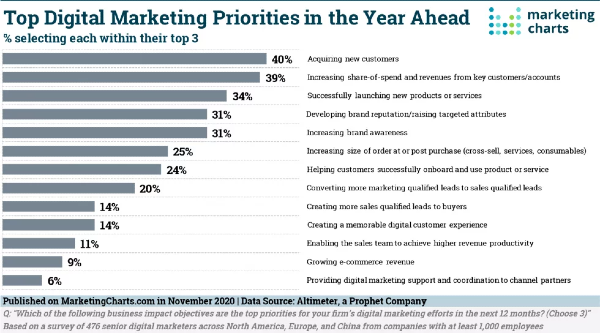
    Where Do Digital Marketers’ Priorities Lie for the Year Ahead?

    Digital marketers have a clear vision of their priorities though some are working with less marketing resources than others, according to Altimeter’s State of Digital Marketing report for 2020. The report highlights that organizations are either cutting costs as a response to the financial uncertainties of the crisis or upping investments in digital to keep up with customers moving online. MarketingCharts


    The CX Courtship: How B2B Brands Get To The Partnership Stage [Merkle Study]
    The B2B customer experience should be just as smooth as B2C. But too often it’s not. Indeed, 35% of businesses with 1,000 or more employees find choosing a B2B supplier to be almost a nightmarish process, judging by Architecting The Ultimate Customer Experience, a study by Merkle, with participation from its gyro and B2B International agencies. MediaPost


    B2B Pros Say: ‘We’re Burned Out’ By Pandemic: Study
    B2B marketers are falling apart from the stress of COVID-19 and its ongoing impact, according to Revealing What’s Fact And What’s Fiction, a study by RollWorks. Of the marketers surveyed, 50% have suffered from pandemic-related burnout, And 50% say the lines between work and personal life have become more blurred in a negative way.  Email Marketing Daily


    Google Page Experience Update To Launch May 2021 With New Snippet Labels.
    The update will show new basic page performance and expected experience statistics to searchers, Google says. Search Engine Roundtable


    How Social Issues Are Sparking Action Among Brands
    A majority of consumers now expect brands to take a stand on social issues and work to effect positive change—though their sentiments are sometimes complicated. A June 2020 survey by Mindshare found that more than two-thirds of US adults said brands should play an important role when it comes to speaking out against racial inequality and injustice. However, six in 10 believed brands that spoke out were being opportunistic. eMarketer


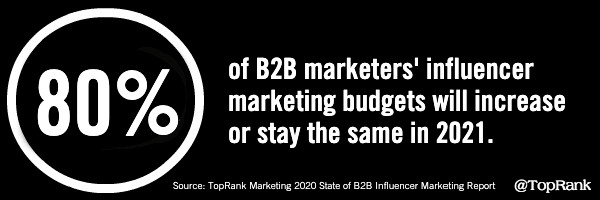
    B2B influencer marketing budgets 2021Marketers Raise Podcast Volume to Eleven – The format is poised to become a permanent and powerful marketing channel
    With podcast advertising racking up 48 percent year-over-year growth in 2019, according to an IAB study, the medium’s 14.7 percent projected growth in 2020 might seem anemic. But that slowed growth is merely a pandemic-induced blip on the radar. The longer-term outlook remains stellar, with spending projected to rebound almost 45 percent, to more than $1 billion in 2021, according to eMarketer, and marketers and media companies are making big bets on the format’s staying power. ANA

    We’re in this together: 5 takeaways from Adobe Experience Makers EMEA 
    This is a unifying moment for businesses. Across virtually every industry and discipline, business leaders are rethinking their approach to leadership, employees are finding new ways to perform their jobs in a digital world, and consumers are re-evaluating the way they make purchases. Adobe


    Instagram Adds Keyword Search in Addition to Profiles and Tags 
    Instagram has announced an update to its search functionality which will give users the capacity to search for specific keywords, as opposed to being limited to profiles, hashtags and locations. Social Media Today


    Executing A B2B Integrated Marketing Strategy: Who and What’s Involved?
    7 in 10 organizations have implemented integrated marketing to some extent, though it remains challenging for many, according to Demand Gen Report and True Influence’s report on the state of integrated marketing in B2B. When it comes to the best tools for executing an integrated marketing strategy, respondents cited CRM (80%), data tools (65%), reporting platforms (63%) and collaboration tools (44%) as particularly useful. MarketingCharts


    New Survey Says We’re Spending 7 Hours Per Day Consuming Online Media 
    A new survey conducted by the research firm DoubleVerify found that we’re now spending about seven hours per day consuming online content. In the past we typically spent about three hours per day consuming media. YouTube streaming has sky-rocketed, up 43% since the pandemic started. We’re also even more obsessed with Facebook with a usage increase of 40%. Forbes


    ON THE LIGHTER SIDE:

    How to do strategic planning by Tom Fishburne — Marketoonist


    TOPRANK MARKETING IN THE NEWS:


    TopRank Marketing – 2020 Research: The Current State & Future of B2B Influencer Marketing – Onalytica

    TopRank Marketing Blog – Top 20 Digital Marketing Blogs and Their Specialties – Vocal


    Have you found your own favorite B2B marketing story from the past week of industry news? Please let us know in the comments below.


    Thank you for joining us for our weekly B2B marketing news, and we hope that you will return again next Friday for another round-up of the most relevant B2B and digital marketing industry news. In the meantime, you can follow us at @toprank on Twitter for even more timely daily news.


    The post B2B Marketing News: Digital Marketing Priorities, Ultimate CX, B2B Burnout, The Power of Podcasting appeared first on B2B Marketing Blog – TopRank®.

  • B2B Marketing News: B2B Buying Disconnect Study, Google’s SERP Video Carousels, B2B Event ROI Data, & Instagram’s New Story Reactions

    B2B Marketing News: B2B Buying Disconnect Study, Google’s SERP Video Carousels, B2B Event ROI Data, & Instagram’s New Story Reactions

    How Can You Improve Your B2B Virtual Event’s ROI?
    47.6 percent of B2B professionals see post-virtual-event audience engagement as having the top return-on-investment (ROI) potential, followed by some 36 percent who said that making the virtual format more dynamic and interactive was a priority, according to recently-released survey data. MarketingCharts


    Adweek Survey Finds 40% of Brands Might Seek New Agencies in 2021
    75 percent of marketers have been satisfied with how agencies have handled the global health crisis, while a third performed better than expected during the pandemic — two of several statistics of interest to digital marketers contained in newly-released Adweek Intelligence survey data. Adweek


    Prop 24 — the California Privacy Rights and Enforcement Act — passed by voters
    The California Privacy Rights and Enforcement Act (CPRA) was recently enacted, which will replace the state’s California Consumer Privacy Act (CCPA), and which includes several new online consumer privacy protections marketers will need to align with or face potential violation penalties from a new California Privacy Protection Agency. DigiDay


    Google Short Videos Carousel In Search Results
    Google has conducted limited testing of a new type of carousel “short videos” section within mobile search results, which would expand on the search giant’s existing video carousel search results and which could eventually offer marketers greater video cross-linking options. Search Engine Roundtable


    COVID-19’s Impact on B2B Martech Budgets
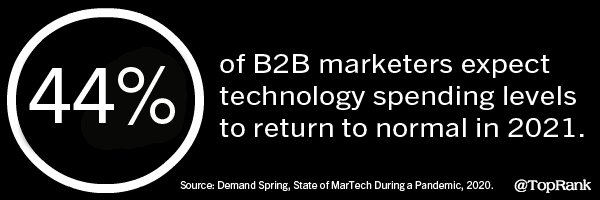
    Some 44 percent of B2B marketers expect marketing technology spending levels to return to normal in 2021, while 19 percent have invested in communication technologies during the pandemic — two of several insights of interest to digital marketers in recently-released survey data. MarketingProfs


    Instagram Tests a New Way for Users to React to Stories Without Sending a DM
    Facebook-owned Instagram has conducted limited testing of a new option allowing users to react to Instagram Stories on the frame of a story, rather than by the existing method of sending a direct message to the publisher of the story content — a move that could lead to new audience interaction opportunities for marketers. Social Media Today


    2020 November 13 Statistics ImageTwitter launches carousel ads to drive web traffic, app installs
    Twitter has released a new advertising option that will allow marketers the ability to include up to six videos or images in a new carousel ad format, Twitter recently announced. The firm also released accompanying statistics showing that testing of the new format resulted in a 15 percent greater click-through-rate on average. Mobile Marketer

    Facebook Tests New Options to Add Motion Effects to Still Images in Feed
    Facebook has tested new visual effect options that add several video-like motion elements to static imagery, with the new image movement features differing from the social media giant’s existing simulated 3D and animated image options. Social Media Today


    Research: Small Wins Can Make a Big Impact on Gender Equality
    The Harvard Business Review takes a look at some of the methods that can help in closing the perception gap, along with recently released health technology industry survey data examining how people can work towards being on the same gender equality page. Harvard Business Review


    The 2021 B2B Buying Disconnect [Report]
    46 percent of B2B technology buyers have felt that there are too many social media ads, with 30 percent noting that they prefered targeted ads, according to recently-released B2B buyer survey data. The report also showed that the most trusted sources of information buyers use include product demonstrations, vendor product websites, and user reviews. TrustRadius


    ON THE LIGHTER SIDE:


    2020 November 13 Marketoonist ComicA lighthearted look at “lead nurturing isn’t a numbers game” by Marketoonist Tom Fishburne — Marketoonist

    Amid the Uncertainty, There’s Room for Levity in Ads — ANA


    TOPRANK MARKETING & CLIENTS IN THE NEWS:


    • Lane R. Ellis / TopRank Marketing — Can You Create a Meaningful Experience in a Virtual Conference? — Timothy Hughes

    Have you found your own favorite B2B marketing story from the past week of industry news? Please let us know in the comments below.


    Thank you for joining us for our weekly B2B marketing news, and we hope that you will return again next Friday for another round-up of the most relevant B2B and digital marketing industry news. In the meantime, you can follow us at @toprank on Twitter for even more timely daily news.


    The post B2B Marketing News: B2B Buying Disconnect Study, Google’s SERP Video Carousels, B2B Event ROI Data, & Instagram’s New Story Reactions appeared first on B2B Marketing Blog – TopRank®.


  • B2B Marketing News: B2B Marketers Face Rising Content Demands, Google’s Mobile Voice Assistant, Performance Marketing Budgets Grow, & The Hyper-Relevant Ad Balancing Act

    B2B Marketing News: B2B Marketers Face Rising Content Demands, Google’s Mobile Voice Assistant, Performance Marketing Budgets Grow, & The Hyper-Relevant Ad Balancing Act

    B2B marketers are struggling to produce enough content amid the pandemic
    35 percent of B2B marketers have trouble producing the content needed to reach and engage audiences, while 68 percent are confident with their approach to content marketing, and only some 8 percent said they were able to attribute return on investment (ROI) to their content plan, according to recently-released survey data. The Drum

    Google Launches Updated Google Analytics, Including Improved Reporting and Data Tracking Options
    Google has given a significant overhaul to its popular Google Analytics website traffic analysis platform, adding a smarter artificial intelligence (AI)-infused approach including new insights such as churn probability and a variety of additional new predictive metrics, the search giant recently announced. Social Media Today

    WordPress can now turn blog posts into tweetstorms automatically
    WordPress has rolled out a new feature that allows entire posts created in the content management system to be shared and discussed on Twitter, including accompanying images and video, with support for multiple Twitter accounts, the firm recently announced. TechCrunch

    Facebook & Instagram Drop Support For WordPress Embeds
    Facebook and its Instagram platform will both cease supporting the traditional and widespread form of WordPress embedding, as unauthenticated embeds won’t work after an October 24 API update — a change aimed at driving publishers to create Facebook Developer accounts and use the oEmbed embedding format, Facebook announced recently. Search Engine Journal

    Marketers Got Hyper-Relevant Advertising Messages Wrong, Study Finds
    Brands achieve a 26.7 percent higher chance of gaining new customers when they target using a goal-driven advertising message mindset compared to an item-driven one, according to recently-released survey data that points out possible consequences of overly-specific ad targeting. MediaPost

    Google Podcasts Manager shows you search impressions and clicks from Google Search
    Google has launched a podcast performance monitoring and reporting system — Google Podcasts Manager — that shows how people find podcasts and what their listening habits are, among other new podcast-related data, Google recently announced. Search Engine Land

    2020 October 16 Statistics Image

    Key Takeaways From Congress’ Digital Competition Report
    Amazon, Apple, Facebook and Google are being urged to implement changes that would promote increased interoperability when it comes to digital advertising, and Adweek takes a look at some of the findings from the nearly 450-page U.S. House Judiciary Committee’s Antitrust Subcommittee report. Adweek

    YouTube Tests Product Tags in Selected Creator Videos as Part of Larger Shift Towards eCommerce
    YouTube has begun testing interactive product tags within certain videos, including new integration with Shopify that could lead to more streamlined clickable products within video content, the video giant recently announced. Social Media Today

    Google Assistant Opens, Searches, Completes Functions In Mobile Apps Using Voice
    Google has enhanced its Google Assistant service with new voice search features for users of Android apps, including functionality to post to social media platforms, the firm recently announced. MediaPost

    Performance Marketing Budgets to Increase as Marketers Chase ROI
    42 percent of B2B marketers plan to increase budgeting for performance marketing initiatives by up to 20 percent over the next year, and 18 percent say they will increase those budgets by over 20 percent — two of several items of interest to digital marketers in recently-released survey data. MarketingCharts

    ON THE LIGHTER SIDE:

    2020 October 16 Marketoonist Comic

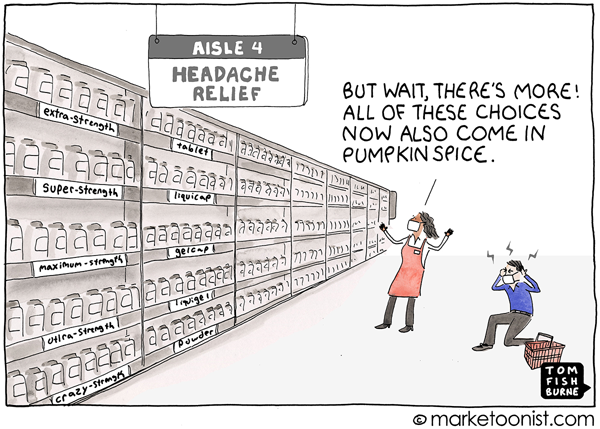
    A lighthearted look at “product choice overload” by Marketoonist Tom Fishburne — Marketoonist

    Coworker’s Sly Smile In Zoom Meeting Suggests Separate Chat Happening Right Now — The Onion

    TOPRANK MARKETING & CLIENTS IN THE NEWS:

    • Lee Odden — Roundup Debate on why people follow influencers — DearMishuDad
    • Lee Odden — The Employees as Influencers – Insights from Adobe — Jason Falls
    • Nick Nelson — 10 Important Building Blocks for Small Business Success — Small Business Trends
    • Lee Odden / TopRank Marketing — The State of B2B Influencer Marketing [Research] — V3Broadsuite

    Have you found your own top marketing stories from the past week of industry news? Please let us know in the comments below.

    Thank you for taking the time to join us for the weekly B2B marketing news, and we hope that you will come back again next Friday for another look at the most relevant B2B and digital marketing industry news. In the meantime, you can follow us at @toprank on Twitter for even more timely daily news.

    The post B2B Marketing News: B2B Marketers Face Rising Content Demands, Google’s Mobile Voice Assistant, Performance Marketing Budgets Grow, & The Hyper-Relevant Ad Balancing Act appeared first on B2B Marketing Blog – TopRank®.